
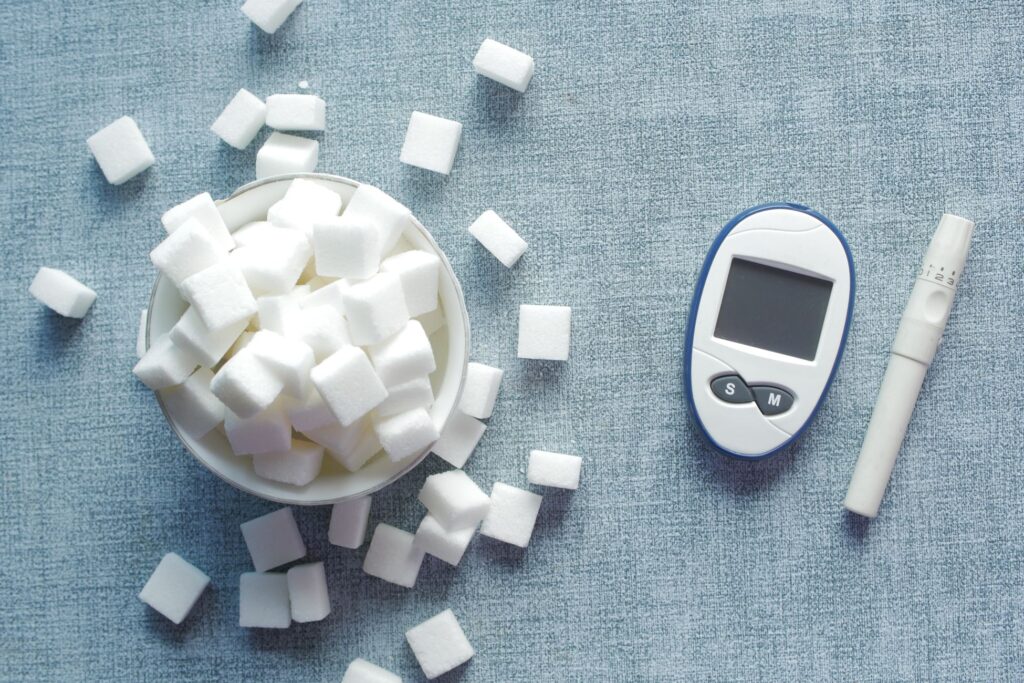
If you have switched to coconut sugar hoping it will be gentler on your blood sugar, you have probably run into a number: 35. That is the figure most commonly quoted for the coconut sugar glycemic index, and it gets repeated everywhere from Instagram infographics to product packaging. But where does that number actually come from, how reliable is it, and does a lower GI really mean coconut sugar is “safe” for blood sugar control? This article digs into the actual research behind the coconut sugar glycemic index, compares it honestly against white sugar and jaggery, and tells you what the GI number does and does not mean for your kitchen.
What Is Glycemic Index, and Why Does It Matter?
The glycemic index (GI) is a 0-100 scale that measures how quickly a carbohydrate-containing food raises blood glucose levels compared to pure glucose (which sits at 100). Foods are generally grouped as:
- Low GI: 55 or below — glucose is released slowly and steadily
- Medium GI: 56-69 — a moderate, intermediate response
- High GI: 70 and above — a sharp, rapid spike in blood sugar
A lower GI generally means a slower, more gradual rise in blood glucose, which is one reason people managing diabetes, PCOS, or simply trying to avoid energy crashes pay attention to it. This is exactly why the coconut sugar GI number gets cited so often when people compare natural sweeteners to refined white sugar.
Coconut Sugar Glycemic Index: The Actual Numbers
The most widely cited figure comes from a 2012 study by the Philippine Food and Nutrition Research Institute, which tested coconut sugar and found a GI of approximately 35 — placing it firmly in the low GI sweetener category. For comparison, refined white sugar typically scores 60-65 on the same scale, almost double that of coconut sugar.
However, it is worth being precise here: that single study is the source most retailers and bloggers repeat, and independent, large-scale replication of the coconut sugar GI is still limited. A handful of smaller follow-up tests have found GI values ranging anywhere from 35 to 54 depending on the specific sample, batch processing, and testing protocol used. This variability matters — it means the “coconut sugar GI is 35” claim, while broadly directionally correct, should be treated as an estimate rather than a fixed clinical constant.
How Is Coconut Sugar Made, and Why Might That Affect GI?
Coconut sugar is produced by collecting the sap (sometimes called toddy or neera) from the flower buds of the coconut palm, then slowly heating and evaporating it until it crystallises — a process very similar to how jaggery is made from sugarcane or palm sap. Because this process does not strip away the sap’s natural inulin content, the resulting sugar retains some fibre.
Inulin is a soluble fibre that may slow glucose absorption in the gut, which is one proposed biological reason behind coconut sugar’s comparatively lower glycemic index. This is structurally similar to why jaggery also tends to score lower than refined white sugar — minimal processing leaves more of the original plant fibre and minerals intact, while industrial refining of white sugar removes virtually everything except sucrose.
Coconut Sugar GI vs White Sugar vs Jaggery vs Honey
Here is how coconut sugar’s glycemic index stacks up against other common sweeteners used in Indian kitchens:
| Sweetener | Approximate GI | Category |
|---|---|---|
| White (refined) sugar | 60-65 | Medium-High |
| Jaggery (gur) | 50-65 | Medium |
| Honey | 45-64 | Medium |
| Coconut sugar | 35-54 | Low-Medium |
| Date sugar / date syrup | 42-55 | Low-Medium |
Notice that coconut sugar’s GI range overlaps with jaggery and honey rather than sitting dramatically below them in every single test. If you want a deeper side-by-side, our full breakdown of coconut sugar vs jaggery and coconut sugar vs white sugar covers mineral content, taste, and cooking performance in addition to GI.
Is Coconut Sugar Truly a Low GI Sweetener? What the Research Actually Says
The honest answer is: probably, but with caveats. The coconut sugar glycemic index research that exists points consistently in the same direction — lower than white sugar — but the sample sizes are small, and GI testing itself is known to vary based on individual metabolism, portion size, and what the sweetener is consumed alongside.
A few things the research does support reasonably well:
- Coconut sugar contains trace amounts of inulin fibre that white sugar does not, which plausibly slows glucose absorption.
- Multiple independent tests, despite differing exact GI values, have never placed coconut sugar above white sugar in glycemic response.
- Coconut sugar GI is consistently reported in the low-to-medium range rather than the high range that refined sugar occupies.
What the research does not support is the marketing leap that coconut sugar is a “diabetic-friendly” or zero-impact sweetener. It still raises blood glucose — just somewhat more slowly than table sugar.
Does Low GI Mean It Is Safe for Diabetics? Important Caveats
This is the part most marketing copy glosses over. Glycemic index only measures the rate of glucose release — it says nothing about glycemic load, which factors in the actual quantity of carbohydrate in a serving. Coconut sugar has roughly the same calorie and carbohydrate content per teaspoon as white sugar; gram for gram, it is not a “free” sugar.
For someone managing diabetes or insulin resistance, a lower coconut sugar GI may mean a gentler curve, but the total amount used still matters enormously. Most endocrinologists and dietitians recommend treating coconut sugar as a moderate-GI sweetener to be used in controlled quantities, not as a substitute that allows unlimited use. If you are diabetic or pre-diabetic, always check with your doctor before changing your sweetener routine based on GI numbers alone.
How to Use Coconut Sugar If You Are Watching Blood Sugar
If you are choosing coconut sugar specifically for its lower glycemic index, a few practical habits make a real difference:
- Pair it with fibre, protein, or fat — having coconut sugar in a meal with these macronutrients further slows absorption, rather than consuming it on an empty stomach.
- Measure rather than eyeball — because it is roughly calorie-equivalent to white sugar, swapping 1:1 without reducing quantity defeats the purpose.
- Choose minimally processed coconut sugar — some commercial blends mix in refined sugar to cut costs, which raises the effective GI of the product. Biotag’s date palm jaggery is made from pure, single-origin coconut palm sap with no added refined sugar, so the GI profile matches what the research describes.
- Track your own response — a home glucometer reading 1-2 hours after a coconut-sugar-sweetened meal will tell you more about your personal glycemic response than any general GI chart.
For more background on what coconut sugar is and how it is processed before it reaches your kitchen, see our complete guide on what coconut sugar actually is.
Frequently Asked Questions
What is the glycemic index of coconut sugar?
Most cited research places the coconut sugar glycemic index at around 35, though independent tests have found values ranging from 35 to 54 depending on the sample and testing method. It is generally classified as a low-to-medium GI sweetener.
Is coconut sugar a low GI sweetener compared to white sugar?
Yes. White sugar typically scores 60-65 on the glycemic index, while coconut sugar scores meaningfully lower across nearly every published test, making it a genuinely lower GI sweetener — though not a zero-impact one.
Can diabetics use coconut sugar because of its lower GI?
A lower coconut sugar GI does not make it diabetic-safe in unlimited quantities. It still contains carbohydrates comparable to white sugar and should be used in moderation, ideally after consulting a doctor or dietitian.
Why does coconut sugar have a lower glycemic index than white sugar?
Coconut sugar retains trace amounts of inulin, a natural fibre present in coconut palm sap, which is largely removed during the refining process used to make white sugar. This fibre is believed to slow glucose absorption slightly.
Does the coconut sugar GI value change between brands?
It can. Coconut sugar that is blended with refined sugar or processed differently may have a higher effective GI than pure, single-origin coconut sugar. Checking for additives on the label is worthwhile if GI is your main reason for choosing it.
Is coconut sugar GI the same as glycemic load?
No. Glycemic index measures how fast a food raises blood sugar; glycemic load also accounts for portion size. Coconut sugar’s glycemic load in a typical serving is still significant, even though its GI number is comparatively low.
How does coconut sugar’s GI compare to jaggery?
The ranges overlap. Jaggery generally tests between 50 and 65, while coconut sugar tests between 35 and 54 — coconut sugar is often slightly lower on average, but the two are closer than most marketing suggests.
About the Author: Aakash Chaudhary is the founder of Biotag — Natural Sweeteners, working with traditional jaggery makers and small-batch farmers across India to bring lab-tested, additive-free natural sweeteners to modern Indian households.