
If you or someone in your family manages diabetes, you’ve probably learned to read a sweetener’s fine print. Date syrup diabetes questions come up constantly in Indian households moving away from refined sugar — is it really gentler on blood glucose, or just another sugar wearing a health-food label? The honest answer is more nuanced than a flat yes or no, and it depends on how much you eat, what you pair it with, and how well-managed your blood sugar already is. This guide breaks down the glycemic index research, the nutrient profile, and practical portioning so you can decide for yourself.
What Is Date Syrup, Exactly?
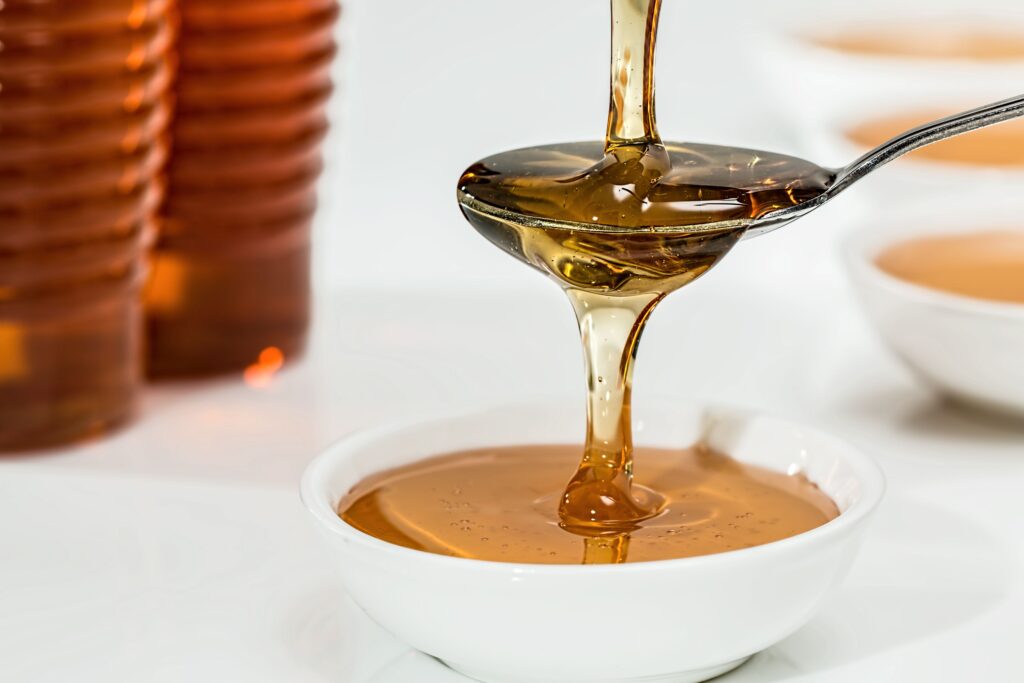
Date syrup is made by cooking down whole dates — usually with water — until they reduce into a thick, dark, molasses-like liquid. Unlike refined sugar syrup, nothing is stripped out during processing. The fibre, minerals, and plant compounds naturally present in dates largely carry over into the final syrup. This is the core reason date syrup gets grouped with jaggery, coconut sugar, and other whole-food sweeteners rather than with white sugar or corn syrup.
Biotag’s date syrup is made from a small batch of Khajur dates, cooked slowly without any added sugar, preservatives, or artificial thickeners — so what you get is genuinely just concentrated date, nothing else.
Date Syrup Diabetes Question: What the Glycemic Index Says
The glycemic index (GI) measures how quickly a food raises blood glucose compared to pure glucose (GI 100). Whole dates typically score in the 40-55 range depending on variety and ripeness — a “medium” GI food. Date syrup, being more concentrated and slightly more processed than whole fruit, tends to sit a little higher, generally in the mid-50s to low-60s range in the studies available.
For comparison, white sugar sits around GI 65, and refined golden syrup or corn syrup can climb well past 70. So date syrup GI is meaningfully lower than table sugar, but it isn’t “low GI” in the way stevia or monk fruit are — those score at or near zero because they don’t contain sugar at all. This distinction matters enormously if you’re managing diabetes: date syrup is a smarter swap than refined sugar, but it still raises blood glucose and still needs to be counted as part of your daily carbohydrate intake.
Nutritional Profile: Date Syrup vs Refined Sugar
Here’s how a tablespoon (about 20g) of date syrup compares with the same amount of white sugar:
| Nutrient | Date Syrup (20g) | White Sugar (20g) |
|---|---|---|
| Calories | ~55-60 kcal | ~77 kcal |
| Total sugars | ~14g | ~20g |
| Fibre | 0.3-0.5g | 0g |
| Potassium | ~65mg | 0mg |
| Iron | Trace amounts | 0mg |
| Antioxidant compounds | Present (phenolics) | None |
The fibre and polyphenol content, though modest, are believed to slightly blunt the blood sugar spike compared to sugar consumed alone — one reason whole-food sweeteners often perform better in real-world use than their raw GI number suggests.
Is Date Syrup Safe for Diabetics? The Honest Answer
So — is date syrup safe for diabetics? In moderate, controlled amounts, most endocrinologists and dietitians would say yes, with important caveats. It is not a “free food.” It contains real, fast-acting sugars (mostly glucose and fructose) that will raise your blood glucose, just somewhat less abruptly than refined sugar might.
The safest way to think about it: date syrup is a better-quality sugar, not a sugar-free one. If your diabetes is well-controlled and you’re tracking total daily carbohydrates, a teaspoon or two used occasionally is unlikely to cause problems. If your blood sugar is poorly controlled or you’re newly diagnosed, discuss any sweetener change with your doctor first.
How Much Date Syrup Can a Diabetic Have?
There’s no universal number, but a commonly cited guideline among dietitians working with Indian diabetic patients is to keep any caloric sweetener — jaggery, honey, date syrup — to no more than 1-2 teaspoons (5-10g) per sitting, counted toward your total daily carbohydrate allowance. A few practical pointers:
- Pair it with fibre, protein, or fat (like in a smoothie or on paratha with dal) to slow absorption
- Check your post-meal blood glucose the first few times you introduce it
- Avoid combining it with other high-GI carbs like white rice or maida in the same meal
- Treat it as an occasional addition, not a daily staple, until your doctor confirms otherwise
Tips for Using Date Syrup If You Have Diabetes
A little goes further than most people expect, since date syrup is noticeably sweeter than sugar syrup. A few practical ways to use it while keeping portions in check:
- Drizzle, don’t pour — use a teaspoon measure rather than eyeballing it over oats or dosa
- Blend it into fat-rich foods — stirred into full-fat yogurt or peanut butter, it slows sugar release
- Use it to replace, not add — swap out the sugar in a recipe entirely rather than sweetening with both
- Pair with cinnamon — small studies suggest cinnamon may modestly improve insulin sensitivity alongside carbohydrates
Date Syrup vs Other Natural Sweeteners for Diabetics
If blood sugar control is your top priority, it helps to see date syrup next to the other natural sweeteners commonly used in Indian kitchens. We’ve covered this ground in more depth in our guide to the best natural sweeteners for diabetics in India and in our deep dive on whether jaggery is safe for diabetics, but here’s the short version:
| Sweetener | Approx. GI | Calories | Best for |
|---|---|---|---|
| Date syrup | ~55-62 | Moderate | Whole-food swap, occasional use |
| Jaggery | ~65-85 | Moderate-high | Traditional cooking, in small amounts |
| Stevia | ~0 | Negligible | Strict blood sugar management |
| Monk fruit | ~0 | Negligible | Baking, daily beverages |
If you want a genuinely zero-glycemic-impact option day to day, our comparison of monk fruit and stevia is worth reading. Date syrup earns its place as an occasional, whole-food indulgence rather than an everyday tabletop sweetener for someone managing diabetes closely.
Who Should Avoid Date Syrup Altogether
Date syrup isn’t right for every diabetic, every time. Be more cautious, or avoid it entirely without medical guidance, if:
- Your HbA1c or fasting glucose is currently poorly controlled
- You are on a strict low-carbohydrate or ketogenic protocol
- You’ve recently had a hypoglycemic or hyperglycemic episode and are re-stabilising
- You are managing gestational diabetes and haven’t yet cleared sweetener choices with your obstetrician
In these situations, our monk fruit blend is a more predictable, zero-calorie choice while your levels stabilise.
Frequently Asked Questions
Is date syrup better than sugar for diabetics?
Generally yes, in the sense that it has a lower glycemic index than refined white sugar and brings some fibre and minerals along with it. It is not, however, a low-GI or blood-sugar-neutral food, so portion control still matters.
What is the date syrup GI compared to honey?
Honey and date syrup land in a broadly similar range, both typically falling in the medium-GI band (roughly 50-65), though exact figures vary by brand, dilution, and testing method. Neither should be treated as a “safe” unlimited sweetener for diabetics.
Can Type 2 diabetics eat date syrup daily?
Most dietitians would recommend against daily use unless your blood sugar is well-controlled and your doctor has specifically approved it as part of your carbohydrate budget. Occasional use in small amounts is generally the safer approach.
Does date syrup spike blood sugar less than jaggery?
In most comparisons, yes — date syrup’s GI tends to run somewhat lower than jaggery’s, though both are considered moderate-to-higher glycemic foods rather than diabetic-safe sweeteners in the way stevia or monk fruit are.
How much date syrup is safe per day for a diabetic?
A common guideline is 1-2 teaspoons (5-10g) per sitting, counted as part of your total daily carbohydrate allowance, rather than an unlimited daily amount.
Is date syrup safe for diabetics with kidney complications?
Date syrup contains a meaningful amount of potassium, which can be a concern for diabetics with kidney disease on a potassium-restricted diet. Please check with your nephrologist or dietitian before adding it to your diet.
What’s a good sugar-free alternative if I want to avoid date syrup entirely?
Our monk fruit blend and monk fruit blend are both zero-calorie, zero-GI options that won’t affect blood glucose, making them a more predictable choice for daily use.
About the Author: Aakash Chaudhary is the founder of Biotag - Natural Sweeteners, working with traditional jaggery makers and small-batch farmers across India to bring lab-tested, additive-free natural sweeteners to modern Indian households.