
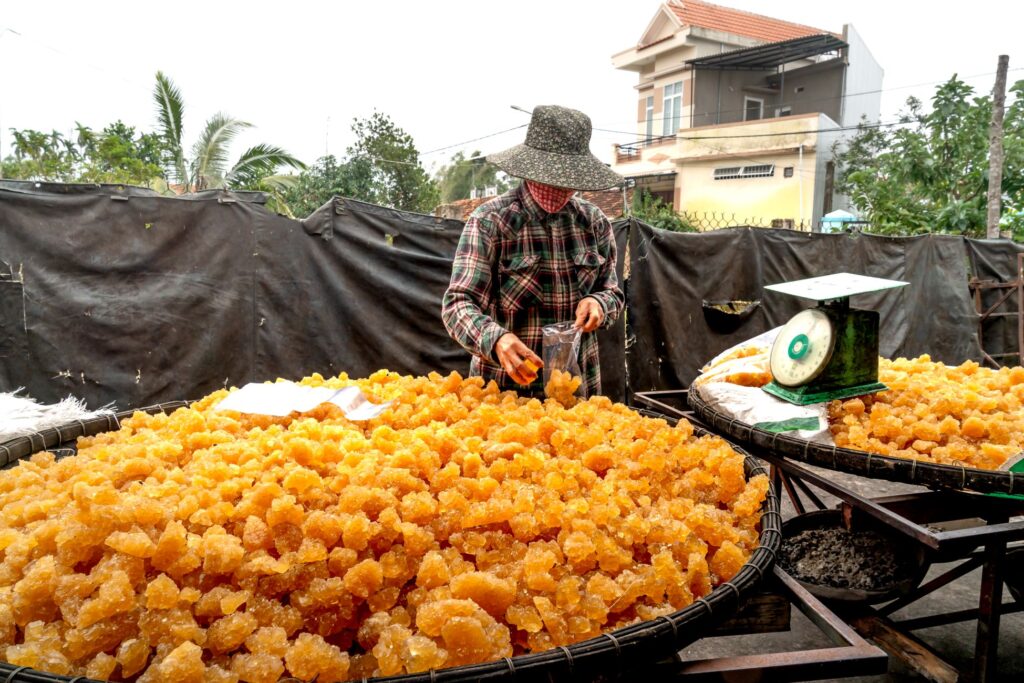
Ask any Indian grandmother why she keeps a lump of gur by the kitchen door and she will likely say one thing: “it is good for the blood.” That belief is the reason jaggery iron content has become one of the most searched questions about India’s oldest sweetener. But how much iron does jaggery really contain, how much of it does your body absorb, and can a piece of gur after lunch genuinely help with anaemia? In this guide we look at what the research actually says, separate tradition from evidence, and give you practical numbers you can use at home.
Why Iron Matters So Much in India
Iron-deficiency anaemia is one of India’s most widespread nutritional problems. According to the National Family Health Survey (NFHS-5, 2019-21), roughly 57% of women aged 15-49 and about two-thirds of children under five are anaemic. Iron carries oxygen in haemoglobin, supports energy metabolism and is essential for a child’s cognitive development. Low iron shows up as fatigue, breathlessness, pale skin, brittle nails and poor concentration.
The ICMR-NIN 2020 guidelines set the Recommended Dietary Allowance at about 19 mg of iron per day for adult men and 29 mg per day for adult women, largely because Indian diets are predominantly plant-based and plant iron is harder to absorb. Against that backdrop, it is easy to see why families look to everyday foods like gur for a little extra help.
Jaggery Iron Content: The Real Numbers
Here is where things get interesting. Published figures for jaggery iron content vary widely, and the reason is mostly about how the jaggery was made rather than the sugarcane itself.
- Indian Food Composition Tables (IFCT 2017, NIN): cane jaggery is listed at roughly 2.6 mg of iron per 100 g.
- Older NIN reference values (Nutritive Value of Indian Foods) quoted around 11 mg per 100 g, a figure still repeated across the internet.
- Independent lab analyses of market samples typically report anywhere from 2 to 12 mg per 100 g.
Why the gap? Traditionally, sugarcane juice was boiled for hours in large iron kadhais. Some of that iron leaches into the syrup, raising the iron in gur substantially. Modern units using stainless steel or aluminium pans produce jaggery with noticeably lower iron. Soil minerals, cane variety and how much molasses is retained also play a part.
| Sweetener | Approx. iron per 100 g | Iron per 10 g serving |
|---|---|---|
| Cane jaggery (steel pan) | 2-3 mg | 0.2-0.3 mg |
| Cane jaggery (iron kadhai) | 5-11 mg | 0.5-1.1 mg |
| Palm jaggery | 1-3 mg | 0.1-0.3 mg |
| Coconut sugar | ~2 mg | ~0.2 mg |
| Refined white sugar | ~0.05 mg | negligible |
So the honest summary is this: jaggery iron content is dramatically higher than white sugar, which has virtually none, but on a per-serving basis it is modest. A typical 10 g piece supplies roughly 1-6% of an adult woman’s daily requirement.
Iron in Gur and Absorption: The Bioavailability Question
Iron in gur is non-heme iron, the same type found in spinach, lentils and grains. Non-heme iron is absorbed far less efficiently than the heme iron in meat and fish, typically in the range of 2-20% depending on what else is on your plate.
What helps absorption:
- Vitamin C: lemon, amla, guava, tomatoes and oranges can multiply non-heme iron absorption.
- Fermented foods: idli, dosa and dhokla batters reduce phytates that block iron.
- Cooking in iron utensils: the same principle that raises iron in traditional jaggery.
What hinders it:
- Tea and coffee: tannins and polyphenols can cut iron absorption sharply, so gur in chai is not the best iron strategy.
- Calcium-rich foods at the same meal: milk and paneer compete with iron.
- High-phytate meals: unfermented whole grains and bran.
This is why the classic Indian habit of eating a small piece of gur after a meal with lemon-dressed dal or a squeeze of nimbu in the sabzi is more sensible than it first looks.
Jaggery Iron and Anaemia: What Studies Show
The link between jaggery iron and anaemia has been explored in a handful of small Indian studies, mostly among adolescent girls and women. Some community trials that combined jaggery with foods like roasted chana, peanuts or sesame reported modest improvements in haemoglobin over several weeks. However, these studies usually had small sample sizes, short durations and several foods changing at once, so it is hard to credit jaggery alone.
What the evidence supports:
- Jaggery is a better source of iron than refined sugar and can make a small contribution to daily intake.
- Traditionally made jaggery (iron-pan boiled) contributes noticeably more iron.
- Jaggery is not a treatment for diagnosed iron-deficiency anaemia. That requires medical evaluation, and usually iron supplements prescribed by a doctor.
Think of jaggery iron as a supporting player in an iron-rich diet, not the lead. If you are managing anaemia, the bigger wins come from green leafy vegetables, pulses, millets like ragi and bajra, and properly prescribed supplementation.
Traditional Indian Pairings That Boost Iron in Gur
Indian food traditions already combine gur with other iron-rich ingredients in clever ways:
- Til-gur laddoo: sesame seeds are rich in iron and calcium; a Makar Sankranti staple.
- Chana-gur: roasted Bengal gram with jaggery, a classic snack for iron and protein.
- Ragi gur malt: finger millet porridge sweetened with jaggery, common in Karnataka.
- Gur and peanut chikki: peanuts add iron, protein and healthy fats.
- Aliv (halim) laddoo: garden cress seeds with jaggery, traditionally given to new mothers.
For recipes built on these pairings, see our guide to using jaggery in everyday Indian cooking. A fine jaggery powder blends easily into laddoo mixtures and porridges, while jaggery cubes are ideal for chikki and the after-meal piece of gur.
How Much Jaggery Per Day for Iron?
Because jaggery is still roughly 65-85% sucrose, the amount you eat matters. For most healthy adults, 10-20 g per day is a reasonable ceiling. That delivers a useful but small amount of iron without excessive sugar.
| Daily amount | Approx. iron | Approx. calories |
|---|---|---|
| 10 g (1 small piece) | 0.3-1.1 mg | ~38 kcal |
| 20 g (2 tsp powder) | 0.5-2.2 mg | ~76 kcal |
| 30 g | 0.8-3.3 mg | ~115 kcal |
If you have diabetes, jaggery raises blood sugar much like regular sugar. Read our evidence-based guide on how much jaggery per day is safe for diabetics before adding it for iron.
How to Choose Jaggery With Better Iron Content
Not all gur is equal. To get the most from jaggery iron content, look for:
- Chemical-free processing: avoid jaggery clarified with sodium hydrosulphite or other bleaching agents; these do nothing for iron and add residues.
- Natural colour: golden-brown to dark brown. Very pale, bright yellow jaggery is often chemically lightened.
- Lab testing: brands that publish mineral analysis give you real numbers instead of marketing claims.
- Purity: adulterants like chalk powder or washing soda dilute nutrients. Learn the warning signs in our guide on how to spot adulterated jaggery.
At Biotag, our jaggery cubes and organic jaggery powder are made without chemical clarifiers and lab-tested for purity, so the naturally occurring iron in gur stays intact. For the wider nutritional picture, read our round-up of the proven health benefits of jaggery.
Frequently Asked Questions
How much iron is in 100 g of jaggery?
Jaggery iron content ranges from about 2.6 mg per 100 g (IFCT 2017) to around 11 mg per 100 g in jaggery boiled in traditional iron kadhais. Most commercial samples fall between 2 and 6 mg.
Can jaggery cure anaemia?
No. Jaggery can contribute small amounts of iron to your diet, but diagnosed iron-deficiency anaemia needs medical evaluation and usually prescribed iron supplements. Use jaggery as part of an iron-rich diet, not as a treatment.
Is iron in gur better absorbed than iron from supplements?
Not necessarily. Iron in gur is non-heme iron, which is absorbed at relatively low rates. Supplements deliver far higher, controlled doses. Pairing jaggery with vitamin C improves absorption.
Does dark jaggery have more iron than light jaggery?
Often, yes. Darker jaggery usually retains more molasses and minerals and is less likely to be chemically bleached. Colour alone is not proof, though, so look for lab-tested brands.
Is jaggery good for iron during pregnancy?
Small amounts of jaggery are a traditional part of pregnancy diets in India and add a little iron. However, pregnant women have high iron needs (about 27 mg/day) and should follow their doctor’s supplementation advice, while watching sugar intake, especially with gestational diabetes.
Should I eat jaggery with tea for iron?
Tea tannins reduce iron absorption, so gur in chai is a good sugar swap but not an effective iron strategy. For iron, eat jaggery after a meal that contains vitamin C.
The Bottom Line on Jaggery Iron Content
Jaggery iron content is real and meaningfully higher than refined sugar, particularly in traditionally made gur. But a sensible daily portion supplies only a small slice of your iron needs, and absorption depends heavily on what you eat alongside it. Enjoy jaggery as a smarter sweetener, pair it with vitamin C and iron-rich traditional foods, and leave anaemia treatment to your doctor. New to gur? Start with our complete guide to jaggery.
About the Author: Aakash Chaudhary is the founder of Biotag - Natural Sweeteners, working with traditional jaggery makers and small-batch farmers across India to bring lab-tested, additive-free natural sweeteners to modern Indian households.