
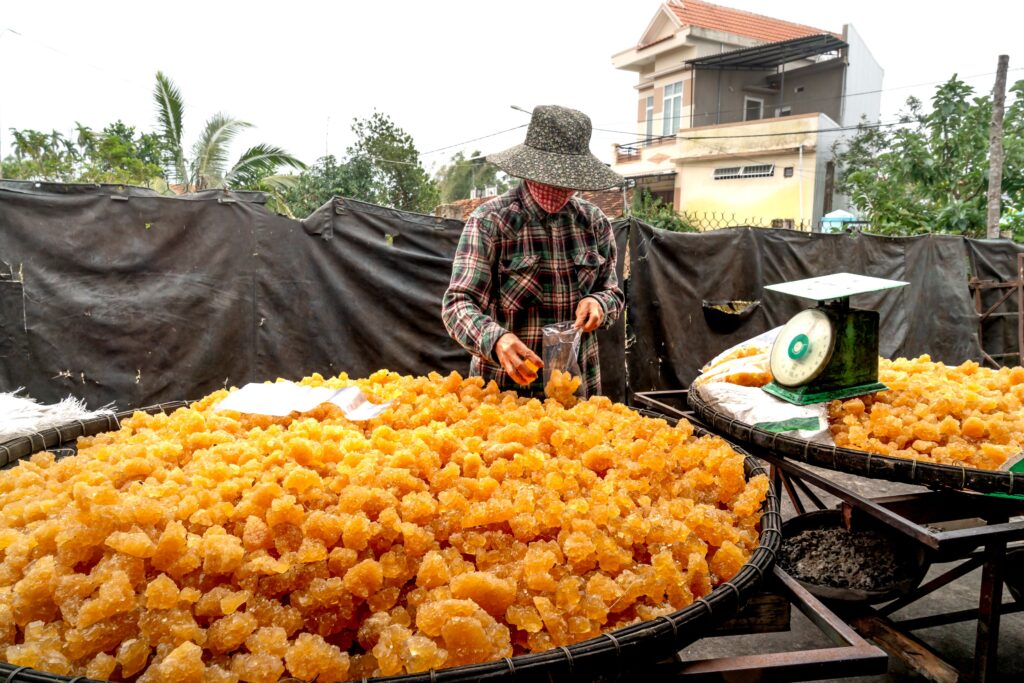
Walk into any Indian kitchen store or scroll through an online grocery app, and you’ll find a dozen jars all claiming to be the best jaggery brand India has to offer. Some are dark and sticky, some are pale gold and crumbly, and a few taste faintly of molasses left too long in the pan. With adulteration still common in the unbranded gur market, picking the right brand isn’t just a taste preference — it’s a health decision. This guide breaks down what actually separates a trustworthy jaggery brand from the rest, compares the top names sold across India in 2026, and gives you a checklist so you never end up with a block that’s more chemical bleach than sugarcane.
What Makes the Best Jaggery Brand in India?
Before comparing names, it helps to know what you’re actually judging. A jaggery comparison worth trusting looks at more than just price per kilogram. The factors that separate a genuinely good brand from a mediocre one include:
- Purity — no added chemical whiteners (sodium hydrosulphite), no synthetic colour, no chalk or starch fillers
- Sourcing — single-origin cane or palm sap versus blended, unverified stock
- Lab testing — third-party or in-house testing for heavy metals and microbial safety
- Texture and melt — clean dissolve in tea or dal without gritty residue
- Packaging and shelf life — moisture-proof packing that prevents the jaggery from turning rock-hard or overly sticky
Any brand that ranks as a genuine top jaggery brand has to perform reasonably well across all five, not just one. A brand that nails purity but ships in flimsy, moisture-permeable packaging will still disappoint you by the time you’re halfway through the pack — and a brand with beautiful packaging but a vague ingredient label isn’t worth the shelf space.
How We Evaluated These Brands
For this roundup, we looked at ingredient labels, FSSAI certification status, customer review patterns across major marketplaces, and — where available — third-party lab reports on sulphur and heavy metal content. We also factored in real-world usability: does the jaggery dissolve well in chai, does it hold shape for laddus, and is the pricing reasonable for the quality on offer. This is the same lens we’d want a discerning home cook or a small bakery to apply before committing to a monthly order.
Top Jaggery Brands in India (2026 Comparison)
Here’s how the most searched-for and widely stocked jaggery brands compare on the essentials:
| Brand Type | Typical Format | Purity Signal | Best For | Price Range (per kg) |
|---|---|---|---|---|
| Lab-tested D2C brands (e.g. Biotag Jaggery Powder) | Powder, blocks, cubes | Batch-tested, no chemical whitening | Daily tea, cooking, health-conscious households | ₹180–₹320 |
| Legacy FMCG brands | Blocks, powder | FSSAI-compliant, mass-market grade | Everyday cooking, budget buyers | ₹90–₹160 |
| Local mandi / loose gur | Blocks, loose slabs | Unverified — high adulteration risk | Not recommended without testing | ₹60–₹120 |
| Organic-certified brands | Powder, blocks | Certified organic, chemical-free | Premium buyers, gifting | ₹250–₹450 |
If you’re specifically comparing traditional cane jaggery against the premium end of the market, our Jaggery Cubes sit in the lab-tested D2C category, sourced directly from small-batch farmers and tested for sulphur residue before packing.
A useful shortcut when running your own jaggery comparison: check the ingredient line first, then the price, and only then the packaging. Brands that list “100% sugarcane juice” with nothing else are almost always a safer bet than ones that list “jaggery, permitted class II preservative” without naming which preservative.
Price vs Quality: What You’re Actually Paying For
It’s tempting to assume the cheapest jaggery on the shelf is the better deal, but price differences across brands usually map to real cost drivers rather than pure margin. A ₹300/kg jaggery from a lab-tested brand is typically paying for three things a ₹90/kg mass-market pack isn’t: traceable sourcing from a specific cluster of farms, batch-level lab testing for heavy metals and sulphur content, and moisture-controlled packaging that extends shelf life without added preservatives.
That doesn’t mean every expensive brand is automatically better — some premium pricing is pure marketing. The way to tell the difference is to look past the packaging copy and check whether the brand actually publishes or shares its lab reports and sourcing details on request. A brand confident in its process rarely hides that information.
For most households, a mid-range, lab-tested D2C brand offers the best balance: meaningfully lower adulteration risk than loose market gur, without paying the full premium of boutique organic-certified labels.
Traditional vs Commercial Jaggery Brands
There are broadly two camps competing for the title of best jaggery brand India shoppers actually trust. The first is the traditional, farmer-linked model — smaller producers who work with a handful of villages, keep batches traceable, and lean on transparency rather than marketing budgets. The second is the large-scale commercial model, which prioritises shelf stability and low pricing, sometimes at the cost of using clarifying agents that strip out beneficial minerals along with impurities.
Neither model is automatically better — a well-run commercial brand with proper FSSAI oversight can still be a safe choice. But if your priority is nutritional value (iron, potassium, and antioxidants intact), traditional and lab-tested D2C brands tend to score higher in independent testing.
Jaggery Powder vs Jaggery Blocks: Which Brand Format to Buy
Even within a single top jaggery brand, the format you choose changes the experience. Powder dissolves faster and is easier to measure for baking, while blocks last longer on the shelf and are preferred for traditional sweets like chikki. We’ve covered this trade-off in detail in our guide on jaggery powder vs jaggery blocks — worth a read before you commit to a bulk purchase, especially if you’re buying from a brand for the first time.
Red Flags: How to Avoid Adulterated Jaggery Brands
Not every jar on the shelf deserves your trust. Watch for these warning signs before adding a jaggery brand to your monthly grocery list:
- Unnaturally bright yellow colour — often a sign of synthetic dye or excessive sodium hydrosulphite bleaching
- No FSSAI license number printed on the pack
- Suspiciously low price compared to the market average for that format
- Chalky aftertaste — can indicate added lime or starch filler
- No batch or manufacturing date — a sign of loose, untraceable sourcing
- Excessive shine or gloss — natural jaggery has a duller, more matte finish
A quick water-dissolve test at home also helps: good jaggery dissolves cleanly, while adulterated versions often leave a visible sediment or chalky residue at the bottom of the glass.
Regional Jaggery Specialties Worth Trying
India’s jaggery landscape isn’t one-size-fits-all, and the best jaggery brands often specialise regionally:
- Kolhapuri gur (Maharashtra) — dense, deep amber, prized for its robust flavour in tea
- Palm jaggery (Tamil Nadu, Kerala) — lower glycaemic impact, distinct caramel-like taste
- Nolen gur (West Bengal) — date palm jaggery, seasonal and intensely aromatic
- Mysore jaggery (Karnataka) — lighter colour, commonly used in South Indian sweets
When comparing brands, check whether they disclose the region their cane or palm sap comes from — vague labelling is often a shortcut around accountability. Brands that source from a single, named region tend to have more consistent flavour batch to batch, since sap composition varies noticeably depending on soil, climate, and the season of harvest.
How to Store Your Jaggery Once You Buy It
Even the best jaggery brand’s product will spoil faster than expected if stored incorrectly. Humidity is the biggest enemy — it causes jaggery to turn sticky, develop mould, or harden into an unusable block. We’ve put together a complete walkthrough on how to store jaggery properly, including airtight container tips and why refrigeration isn’t always the answer.
Frequently Asked Questions
Which is the best jaggery brand in India?
There’s no single universal answer — it depends on whether you prioritise organic certification, price, or traditional sourcing. Lab-tested D2C brands like Biotag tend to score well on purity and traceability, while legacy FMCG brands offer better price-per-kilogram for everyday cooking.
Is branded jaggery better than loose market jaggery?
In most cases, yes. Branded jaggery typically carries an FSSAI license, batch testing, and consistent sourcing, whereas loose mandi jaggery has a higher risk of adulteration with chemical whiteners or fillers since it isn’t independently verified.
How can I check if jaggery is pure at home?
Dissolve a small piece in a glass of water. Pure jaggery dissolves almost completely, leaving little to no residue. If you see sediment settling at the bottom or a distinct chalky layer, the batch likely contains impurities.
Is organic jaggery worth the extra cost?
Organic certification guarantees the sugarcane was grown without synthetic pesticides and the jaggery was processed without chemical clarifying agents. If you consume jaggery daily, the extra cost is generally justified for the reduced chemical exposure.
What is the shelf life of good quality jaggery?
Properly stored in an airtight container away from moisture, most branded jaggery lasts 6 to 12 months. Powder form typically has a slightly shorter shelf life than solid blocks due to its larger surface area.
Does the best jaggery brand always cost more?
Not necessarily. While premium organic brands do sit at the higher end, several mid-priced, lab-tested D2C brands offer comparable purity at a more accessible price point than the highest-priced organic labels.
Can I substitute any jaggery brand in a recipe that calls for sugar?
Generally yes, though the exact ratio depends on the jaggery’s moisture content. Powdered jaggery from a consistent brand substitutes most predictably in baking, while blocks work well in syrups, chai, and traditional sweets.
About the Author: Aakash Chaudhary is the founder of Biotag - Natural Sweeteners, working with traditional jaggery makers and small-batch farmers across India to bring lab-tested, additive-free natural sweeteners to modern Indian households.