
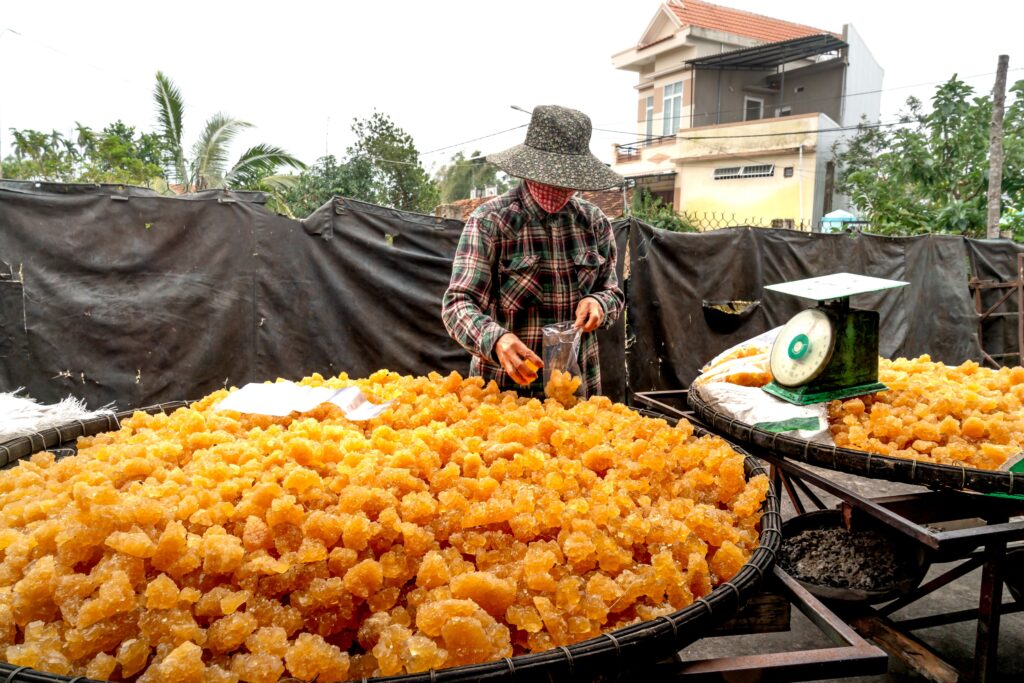
If you have tried to buy organic jaggery online in the last year, you have probably noticed the same problem twice: too many sellers, and too little proof that what lands on your doorstep is actually the jaggery pictured on the listing. Adulteration with chemical whiteners, added sugar syrup, and vague “natural” labelling are common enough in the jaggery trade that shoppers are right to be cautious. This guide walks through what “organic” should actually mean, how to check a seller before you pay, what different types of jaggery cost, and how to store what arrives so it lasts.
Why More Indians Are Choosing to Buy Organic Jaggery Online
Local kirana stores rarely stock more than one or two jaggery varieties, and almost none carry lab-tested or certified organic options. Shopping for jaggery online India-wide opens up palm jaggery, date palm jaggery, liquid jaggery syrup, and single-origin blocks that simply are not available on a neighbourhood shelf. It also lets you compare lab reports, read ingredient lists, and check reviews before committing — something a five-minute store visit never allows. For households managing diabetes or insulin resistance, this matters even more; see our guide on how much jaggery per day is safe for diabetics before you decide on quantity and frequency.
What “Organic” Really Means for Jaggery
Genuine organic jaggery comes from sugarcane or palm sap grown without synthetic pesticides or chemical fertilisers, and processed without sodium hydrosulphite, hydros, or other whitening and clarifying agents. Most jaggery sold in loose markets uses at least one of these agents to speed up crystallisation and improve colour. Organic jaggery, by contrast, keeps its natural molasses-brown to golden hue and a slightly grainy, less uniform texture — that irregularity is usually a good sign, not a defect.
How to Spot Genuine Organic Jaggery India Sellers
Not every listing labelled “organic” backs the claim with evidence. When you shop for organic jaggery India sellers online, look for these four signals before adding anything to your cart:
- Lab test reports — a credible seller publishes or shares a recent third-party lab report checking for sulphur residue and heavy metals.
- Traceable sourcing — the listing names the region or the farmer network the cane or palm sap comes from, rather than a generic “sourced from India” line.
- Ingredient transparency — the only ingredient listed should be jaggery (or jaggery plus a named flavour, like ginger or cardamom). Anything vague like “natural agents” is a red flag.
- Batch and manufacturing dates — jaggery is a seasonal product; a seller who prints batch dates is usually rotating stock properly.
Types of Jaggery You Can Buy Online
Once you move past the single block of jaggery sold at a local store, there is a surprising amount of variety. Here is a quick comparison to help you choose:
| Type | Source | Best For | Typical Texture |
|---|---|---|---|
| Cane jaggery blocks | Sugarcane juice | Everyday cooking, sweets | Firm, moist |
| Jaggery powder | Sugarcane juice | Baking, tea, quick mixing | Fine granules |
| Palm jaggery | Palm sap | Traditional South Indian sweets | Dense, mineral-rich flavour |
| Date palm jaggery | Date palm sap | Winter sweets, payasam | Soft, deep caramel notes |
| Liquid jaggery syrup | Sugarcane or palm | Drinks, drizzling, marinades | Pourable syrup |
What to Check Before You Buy Organic Jaggery Online
Before you check out, run through this short list:
- Does the product page mention a certification body or a lab report — not just the word “organic” in the title?
- Is the price realistic for the quantity? Jaggery priced far below market rate is rarely genuinely organic.
- Are the reviews specific (mentioning taste, texture, packaging) rather than generic five-star comments?
- Does the seller specify a shelf life and storage instructions on the packaging or listing?
- Is the packaging food-grade and resealable, so the jaggery does not pick up moisture in transit?
Price Guide: What Should Organic Jaggery Cost in India
As a rough benchmark, lab-tested organic cane jaggery in India typically runs somewhere between ₹120 and ₹220 per 500g depending on the region, packaging, and whether it is powder, block, or cubes. Palm and date palm jaggery usually cost 20-40% more because sap collection is slower and more seasonal. If a listing prices jaggery close to loose-market rates for refined sugar, treat that as a warning sign rather than a bargain — genuine organic processing costs more, and the price should reflect that.
Why Biotag Is a Trusted Source to Buy Organic Jaggery Online
At Biotag, every batch is sourced directly from small-batch jaggery makers we work with across India, and every batch is lab-tested for sulphur and heavy-metal residue before it is listed. Our jaggery powder is a popular starting point for households moving away from refined sugar in tea, baking, and everyday cooking, while our jaggery cubes suit traditional sweets and festive cooking where texture matters. If you are comparing options across brands, our buyer’s guide to the best jaggery brands in India breaks down what separates a genuinely organic brand from one that only markets itself that way.
Storage and Shelf Life Tips
Organic jaggery has no preservatives, so how you store it after it arrives matters. Keep it in an airtight container away from direct sunlight and humidity — a kitchen cabinet works better than an open shelf near the stove. Jaggery blocks generally stay fresh for 6-9 months when stored this way, while powder can last slightly longer if kept fully sealed. If you notice small white specks forming on a block, that is usually just natural sugar crystallisation, not spoilage; a light rinse and immediate drying is enough to fix it. For sweet-tooth ideas that put your jaggery to good use quickly, our healthy jaggery laddu recipe is a good place to start.
Frequently Asked Questions
Is it safe to buy organic jaggery online without seeing it in person?
Yes, as long as the seller shares lab reports and clear sourcing information. Since jaggery is a packaged, shelf-stable product, buying jaggery online India-wide is generally as safe as buying it in a store, provided the packaging is sealed and food-grade.
How can I tell if jaggery is adulterated?
Adulterated jaggery is often unnaturally bright yellow or white-tinged, dissolves too quickly in water, or leaves little residue when dissolved. Genuine organic jaggery is darker, slightly uneven in colour, and leaves a small amount of natural sediment.
What is the difference between organic jaggery and regular jaggery?
Regular jaggery is often processed with chemical clarifying agents to improve appearance and speed up production. Organic jaggery skips these agents entirely, relying only on traditional boiling and setting methods, which keeps more of the natural minerals intact.
Which type of jaggery is best for diabetics?
No jaggery is calorie-free, but palm jaggery and date palm jaggery tend to have a slightly lower glycemic impact than cane jaggery for some people. Portion control matters more than the type — read our detailed breakdown on safe daily jaggery quantity for diabetics before making it a regular habit.
How long does organic jaggery stay fresh after opening?
Once opened, jaggery stays fresh for 4-6 months if kept in an airtight container away from moisture and heat. Refrigeration is not required but can extend shelf life further in humid climates.
Can I buy organic jaggery online in bulk for festivals or events?
Most organic sellers, including Biotag, offer larger pack sizes for bulk buyers around festival seasons. It is worth ordering a few weeks in advance, since small-batch production means stock can run out closer to major festivals like Diwali and Makar Sankranti.
Does organic jaggery taste different from regular jaggery?
Yes — most people notice a deeper, more complex sweetness with mild caramel or mineral notes, compared to the flatter, one-dimensional sweetness of chemically processed jaggery.
About the Author: Aakash Chaudhary is the founder of Biotag, working with traditional jaggery makers and small-batch farmers across India to bring lab-tested, additive-free natural sweeteners to modern Indian households.