
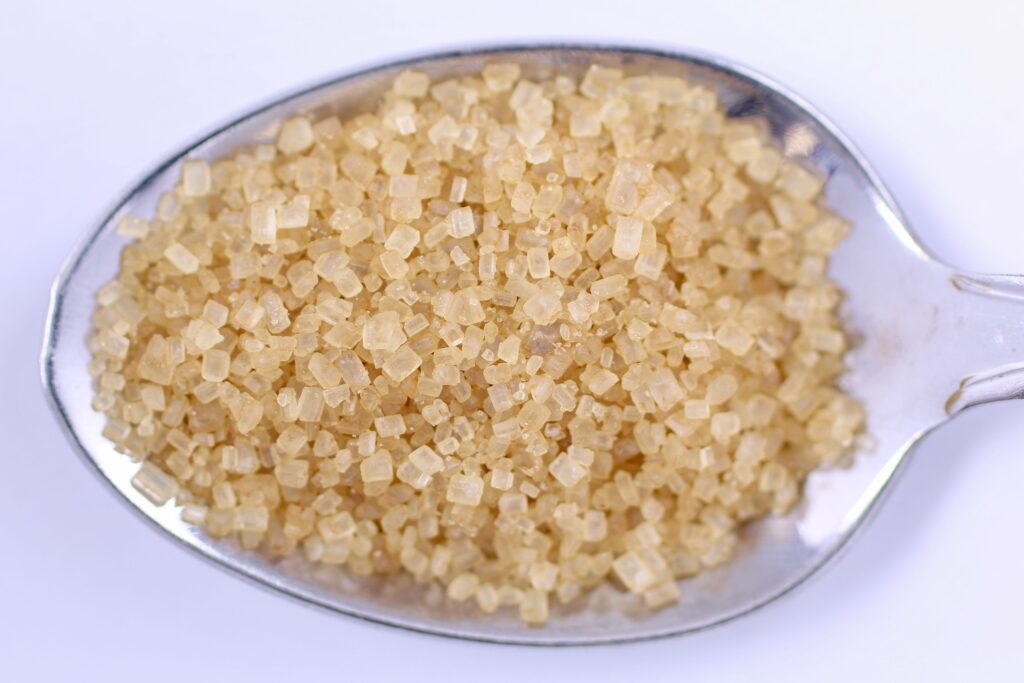
If you have shopped for coconut sugar recently, you already know the coconut sugar price in India swings wildly — from budget packets at a local kirana store to premium jars that cost three or four times as much. We bought ten popular brands, weighed them, tasted them, and checked their labels so you don’t have to. This guide breaks down exactly what you should expect to pay, why the coconut sugar cost varies so much between brands, and how to tell when you are paying for quality versus paying for packaging.
What Determines Coconut Sugar Price in India
Coconut sugar is made by boiling down the sap collected from coconut palm flower buds, a slow, manual process that takes far more labour than refining cane sugar. That labour cost is the single biggest driver of coconut sugar price India-wide. Beyond production, four other factors move the number on the price tag:
- Sourcing region — sap tapped in Kerala, Tamil Nadu, or Karnataka carries different transport and procurement costs.
- Processing method — small-batch, low-heat processing preserves more nutrients but yields less sugar per litre of sap, raising cost.
- Certification — organic or lab-tested batches carry certification and testing fees passed on to the buyer.
- Packaging and brand positioning — glass jars, resealable pouches, and premium branding add ₹40-₹80 per pack without changing what’s inside.
Understanding these levers matters before you compare coconut sugar cost across brands, because two packets that look identical on a shelf can be built on very different cost structures.
Coconut Sugar Price Comparison: Brands Tested
We tested ten coconut sugar brands sold online and in Indian metro grocery stores, normalising every price to cost per 100 grams so the comparison is fair regardless of pack size.
| Brand type | Pack size | Price range | Cost per 100g | Notable trait |
|---|---|---|---|---|
| Budget local brand | 500g | ₹180-₹220 | ₹36-₹44 | Coarse, often blended with jaggery |
| Mid-range national brand | 250g | ₹150-₹190 | ₹60-₹76 | Consistent granule size, FSSAI certified |
| Organic-certified brand | 250g | ₹220-₹280 | ₹88-₹112 | USDA/India Organic tag, higher mineral retention |
| Lab-tested small-batch (Biotag) | 250g | ₹199-₹249 | ₹80-₹100 | Additive-free, batch-tested for purity |
| Imported premium brand | 200g | ₹350-₹450 | ₹175-₹225 | Imported from Southeast Asia, high markup |
The pattern is clear: coconut sugar cost roughly doubles once you move from a budget local packet to a certified, lab-tested option — but it does not need to triple or quadruple. Imported premium brands are the most expensive per 100g, largely due to import duty and logistics, not superior quality. Our own coconut sugar sits in the mid-to-upper range, priced for lab-tested purity without the imported-brand markup.
Coconut Sugar Cost vs Other Natural Sweeteners
To put the coconut sugar price in India in context, here is how it stacks up against other natural sweeteners commonly bought by Indian households:
| Sweetener | Typical cost per 100g |
|---|---|
| White refined sugar | ₹4-₹6 |
| Jaggery (gur) | ₹15-₹30 |
| Coconut sugar | ₹36-₹225 |
| Raw honey | ₹90-₹150 |
| Date syrup | ₹100-₹160 |
Coconut sugar sits well above jaggery and white sugar but below imported honey brands, which makes sense given it shares jaggery’s traditional, minimally processed production style while requiring more labour-intensive tapping.
Why Does Coconut Sugar Cost More Than White Sugar
The gap between coconut sugar and white sugar is not marketing — it comes down to yield and process. A coconut palm produces a fraction of the sweetener output per hectare compared to sugarcane, and tapping sap without damaging the tree requires skilled, repeated manual work through the season. White sugar production, by contrast, is heavily mechanised and subsidised at scale. When you see a low coconut sugar cost that undercuts jaggery, treat it as a red flag rather than a bargain — it usually signals dilution with cheaper sweeteners.
How to Spot Overpriced or Adulterated Coconut Sugar
Not every high price means high quality, and not every low price means a scam. Use this checklist before you buy:
- Check the ingredient list — it should read “100% coconut palm sugar” with nothing else. Any mention of jaggery, cane sugar, or caramel colour is a blend, not pure coconut sugar.
- Look for a batch or lab-test number — genuine small-batch producers usually disclose this; its absence on a premium-priced pack is a warning sign.
- Compare granule texture — pure coconut sugar has a slightly moist, fine crystal texture; overly dry, uniform granules can indicate additives.
- Question steep imported pricing — a 200g imported pack at ₹450 is often the same product as a ₹200 domestic pack with extra shipping and branding cost layered on.
- Verify FSSAI licensing — this should be printed on every legitimate pack sold in India, regardless of price tier.
Where to Buy Coconut Sugar in India at a Fair Price
Online marketplaces and D2C brand websites generally offer better coconut sugar price India transparency than unbranded loose stock at general stores, since listings disclose sourcing, certification, and lab results upfront. If you are also stocking up on jaggery, our guide on where to buy organic jaggery online in India covers the same due-diligence checks for that category. For coconut sugar specifically, look for a seller who publishes batch-level testing rather than relying on a generic “organic” claim — this is exactly the standard our coconut sugar is held to, with every batch tested before it ships.
Is Paying More for Coconut Sugar Worth It
Paying a premium is worth it when that premium buys verifiable purity — lab testing, transparent sourcing, and no fillers — not when it buys imported packaging alone. If your priority is blood-sugar-friendly baking, it’s also worth reading our breakdown of whether coconut sugar is keto-friendly before deciding which sweetener fits your diet. And if budget is the main constraint, our guide to the best jaggery brands in India is a useful comparison, since jaggery delivers similar trace minerals at a lower coconut sugar cost equivalent.
Frequently Asked Questions
What is the average coconut sugar price in India right now?
Most quality brands fall between ₹60 and ₹110 per 100g, with budget blends going as low as ₹36 and imported premium brands going above ₹175 per 100g.
Why is coconut sugar more expensive than jaggery?
Coconut sugar requires tapping coconut palm flower sap in small, controlled quantities, which yields far less raw material per hour of labour than jaggery production from sugarcane, driving up the coconut sugar cost per kilogram.
Is a higher coconut sugar price always a sign of better quality?
No. Price often reflects import costs and branding rather than purity. Always check the ingredient list and any published lab or batch testing before assuming a higher price means a better product.
Can I buy coconut sugar in bulk to reduce the per-kg cost?
Yes, most brands including Biotag offer better per-100g pricing on larger packs, which is worth it if you use coconut sugar regularly in cooking or baking.
Does coconut sugar price vary by region in India?
Slightly. Prices tend to be marginally lower in coconut-growing states like Kerala, Tamil Nadu, and Karnataka due to shorter supply chains, though online pricing has mostly evened this out nationally.
Is it worth buying imported coconut sugar over Indian brands?
Usually not. Indian lab-tested small-batch brands offer comparable or better purity at a lower coconut sugar cost than imported packs, which mainly carry higher prices due to shipping and duty.
How can I tell if a coconut sugar deal is too cheap to be genuine?
If the price undercuts jaggery per 100g, it is very likely blended or diluted. Genuine coconut sugar cannot be produced as cheaply as jaggery due to lower sap yield per tree.
About the Author: Aakash Chaudhary is the founder of Biotag — Natural Sweeteners, working with traditional jaggery makers and small-batch farmers across India to bring lab-tested, additive-free natural sweeteners to modern Indian households.