
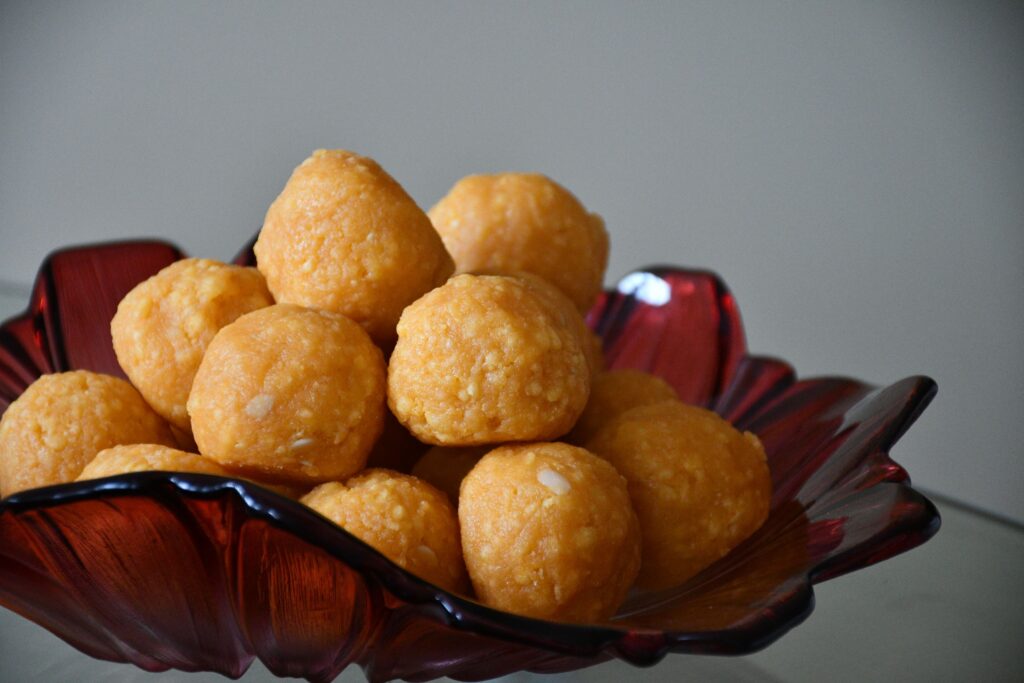
If you grew up in an Indian household, chances are your grandmother’s kitchen always had a tin of laddus tucked away for guests, festivals, or that after-school hunger pang. This jaggery laddu recipe brings back that same warmth, minus the refined sugar crash. Made with roasted gram flour, ghee, and pure jaggery powder, these laddus are naturally sweetened, quick to put together, and forgiving enough for a first-time cook to get right on the first try.
Unlike sugar-laden mithai from the sweet shop, a good gur ladoo relies on jaggery’s mineral-rich sweetness and slower glucose release to keep the treat from feeling like a spike-and-crash snack. This healthy laddu recipe uses whole ingredients you likely already have in your pantry, and the entire batch comes together in under 30 minutes.
Why Jaggery Instead of Refined Sugar
Refined white sugar is stripped of the molasses that naturally occurs in sugarcane juice, which also strips out the iron, potassium, and trace minerals jaggery retains. When you swap sugar for jaggery in a laddu recipe, you get a deeper, caramel-like sweetness along with a lower glycemic load compared to plain sucrose. That’s part of why so many Indian households have quietly gone back to cooking with jaggery for everyday sweets rather than saving it only for winter.
For consistent results, use a fine, clump-free jaggery powder rather than shaving down a block, since the powder melts evenly into hot ghee without leaving gritty bits in your laddus.
Ingredients You Need
| Ingredient | Quantity |
|---|---|
| Roasted gram flour (besan) or wheat flour | 1 cup |
| Ghee | 1/2 cup |
| Jaggery powder | 3/4 cup (adjust to taste) |
| Cardamom powder | 1/2 tsp |
| Chopped almonds and cashews | 2 tbsp |
| Melon seeds or sesame seeds (optional) | 1 tbsp |
If you prefer a no-cook, protein-forward version for post-workout snacking, our ready-made energy bites use the same jaggery-based sweetening approach and are worth keeping on hand for busy days.
Step-by-Step Method
- Roast the flour: Heat ghee in a heavy-bottomed pan on low flame. Add the gram flour and roast continuously for 8-10 minutes until it turns golden and releases a nutty aroma. This step matters most for texture — undercooked flour tastes raw, while overcooked flour turns bitter.
- Cool slightly: Take the pan off heat and let the mixture cool for 3-4 minutes. Jaggery melts unevenly if added to a pan that’s too hot, so patience here pays off.
- Add jaggery and spices: Stir in the jaggery powder, cardamom powder, and chopped nuts. Mix until the jaggery melts completely and binds with the roasted flour.
- Shape into laddus: While the mixture is still warm (but cool enough to touch), take small portions and roll firmly between your palms into round balls.
- Cool and store: Let the laddus cool completely on a plate before transferring to an airtight container.
Tips for Perfect Texture Every Time
- If your laddus crumble instead of holding shape, the mixture is too dry — add a teaspoon of warm ghee and try again.
- If they’re too soft or sticky, the jaggery may have been added while the flour was still too hot; let the mix cool a touch more next time.
- Always roll laddus while the mixture is warm, not hot or fully cold — warm dough holds its shape best.
- Use a kitchen scale if you want uniform-sized laddus for gifting or festival platters.
Popular Variations to Try
Once you’ve nailed the base jaggery laddu recipe, it’s easy to riff on it:
- Coconut jaggery laddu: Replace half the gram flour with desiccated coconut for a chewier, tropical variation.
- Til gur ladoo: Swap in roasted sesame seeds as the base ingredient — a classic winter favorite in Maharashtra and Karnataka.
- Dry fruit laddu: Increase the almond and cashew quantity and add dates for extra fiber and natural sweetness.
- Palm jaggery version: For a more mineral-forward, slightly smoky flavor, try our date palm jaggery in place of regular jaggery powder.
Storage and Shelf Life
Stored in an airtight container at room temperature, these laddus stay fresh for 7-10 days. Refrigeration extends shelf life to about three weeks, though the texture firms up slightly when chilled — simply bring back to room temperature before serving. Because jaggery is naturally hygroscopic (it absorbs moisture from the air), always use a completely dry spoon when scooping out laddus to prevent the batch from turning sticky. For more on this, see our detailed guide on how to store jaggery so it stays fresh for months.
Is This Laddu Recipe Diabetic-Friendly?
Jaggery still contains natural sugars and should be consumed in moderation even though it has a comparatively better nutrient profile than refined sugar. One laddu made with this recipe typically contains 8-10 grams of jaggery, which is a modest amount when eaten occasionally. If you’re managing blood sugar levels closely, we’d recommend reading our evidence-based breakdown on whether jaggery is safe for diabetics before making this a regular treat, and consulting your doctor about portion sizes that work for you.
Frequently Asked Questions
Can I make this jaggery laddu recipe without ghee?
Ghee gives the laddus their characteristic richness and helps them bind, but you can substitute virgin coconut oil in equal quantity for a dairy-free version. The flavor will be slightly different but the texture holds up well.
Why did my laddus turn out hard instead of soft?
This usually happens when the jaggery is cooked too long after melting, causing it to crystallize as it cools. Add jaggery off the heat and mix quickly rather than returning the pan to the flame.
Can I use jaggery blocks instead of jaggery powder?
Yes, but you’ll need to grate or finely chop the block first and ensure it melts completely into the warm ghee-flour mixture, or you’ll end up with hard, gritty bits in your laddus. Jaggery powder saves this extra step.
How many laddus does this recipe make?
This quantity yields approximately 12-14 medium-sized laddus, depending on how tightly you roll them.
Is gur ladoo the same as this jaggery laddu recipe?
Yes — “gur” is the Hindi word for jaggery, so gur ladoo and jaggery laddu refer to the same category of sweet, though regional recipes vary in the base ingredient used (besan, wheat flour, sesame, or coconut).
Can children eat these laddus?
Yes, in fact jaggery laddus are a popular after-school snack in many Indian homes because they offer more sustained energy than sugar-based sweets, along with small amounts of iron. As with any sweet, moderation is still key.
What’s the best jaggery to use for a healthy laddu recipe?
Look for additive-free, lab-tested jaggery powder without added chemical whiteners or excess moisture, since these can affect both flavor and shelf life. Our jaggery powder is tested for purity and works well for laddus, tea, and baking alike.
About the Author: Aakash Chaudhary is the founder of Biotag — Natural Sweeteners, working with traditional jaggery makers and small-batch farmers across India to bring lab-tested, additive-free natural sweeteners to modern Indian households.