
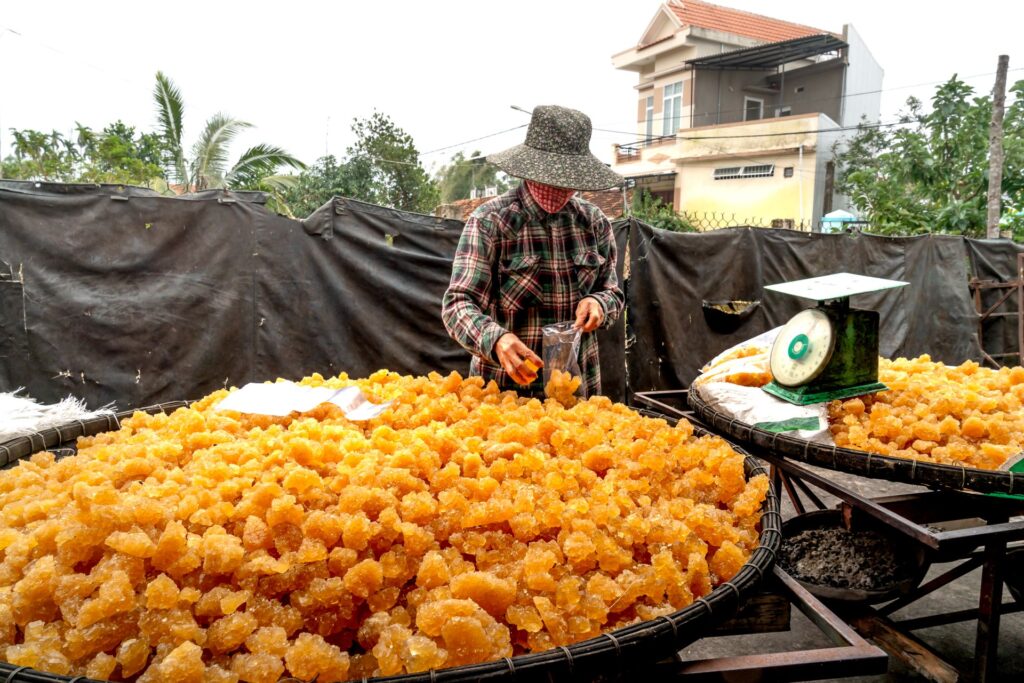
Ask any grandmother why gur follows a heavy meal and she will say it “cleans the system”. Modern food chemistry has a more precise phrase for part of what she meant: jaggery antioxidants. Unlike refined white sugar, which is stripped down to almost pure sucrose, jaggery keeps a share of the sugarcane’s natural phenolic compounds, flavonoids and minerals. In this guide we look at what laboratory studies actually measure, how jaggery antioxidants compare with sugar and other sweeteners, and what that difference does (and does not) mean for your health.
What Are Jaggery Antioxidants?
Antioxidants are compounds that neutralise free radicals, the unstable molecules produced during normal metabolism, pollution exposure and stress. When free radicals outnumber the body’s defences, the result is oxidative stress, which is linked to inflammation and cellular ageing.
Sugarcane juice naturally contains several antioxidant groups. Because jaggery is made by simply boiling and concentrating that juice, without the centrifuging and chemical clarification used for white sugar, many of them survive. The main jaggery antioxidants identified in research include:
- Phenolic acids such as chlorogenic, caffeic, ferulic and p-coumaric acid
- Flavonoids including apigenin, luteolin and tricin derivatives found in cane
- Maillard reaction products, the brown compounds formed while the juice is boiled, which show measurable free-radical scavenging activity
- Trace minerals like zinc, copper, manganese and selenium that act as co-factors for the body’s own antioxidant enzymes
Together, the jaggery phenolics and Maillard products are responsible for most of the antioxidant activity that labs detect.
How Labs Measure Antioxidant Activity
When you read that one food is “richer in antioxidants” than another, the claim usually comes from one of a handful of standard tests. Knowing what they measure helps you read the research sensibly.
| Test | What it measures | Typical unit |
|---|---|---|
| Folin-Ciocalteu | Total phenolic content | mg gallic acid equivalent (GAE) per 100 g |
| DPPH assay | Ability to scavenge a stable free radical | % inhibition or IC50 |
| FRAP | Ferric reducing antioxidant power | mmol per 100 g |
| ORAC | Oxygen radical absorbance capacity | µmol Trolox equivalent per 100 g |
These are test-tube measurements. They tell us how much antioxidant potential a food carries, not exactly how much your body absorbs, a point we return to below.
Jaggery Antioxidants vs Sugar: The Lab Comparison
The clearest comparison comes from two lines of research. Indian researchers studying jaggery (published in Food Chemistry, 2009) found that jaggery showed significant phenolic content and free-radical scavenging activity, and protected cells against oxidative damage in lab models, while refined sugar showed essentially none. A separate American study (Journal of the American Dietetic Association, 2009) measured the total antioxidant content of sugar alternatives and found refined white sugar, corn syrup and agave near zero, with less-refined cane products, date sugar and molasses far higher.
Reviews of non-centrifugal cane sugar (the global term for jaggery, panela and kokuto) consistently report the same pattern. Exact numbers vary with cane variety, soil and boiling method, so the table below shows relative ranking rather than a single fixed value.
| Sweetener | Processing | Relative antioxidant activity |
|---|---|---|
| Refined white sugar | Centrifuged, clarified, bleached | Negligible |
| Agave / corn syrup | Highly processed syrups | Negligible to very low |
| Brown sugar (commercial) | White sugar plus added molasses | Low |
| Honey | Raw or lightly filtered | Low to moderate (darker honey higher) |
| Sugarcane jaggery | Juice boiled down, not centrifuged | Moderate to high |
| Date palm jaggery | Palm sap boiled down | Moderate to high |
| Blackstrap molasses | Residue of sugar refining | Highest |
The takeaway is simple: refining removes almost all jaggery antioxidants from cane, and the closer a sweetener stays to the plant, the more it keeps.
Why Jaggery Phenolics Survive Processing
White sugar production is designed to remove “impurities”, and from a refiner’s point of view the coloured phenolic compounds are exactly that. Lime, carbonation or sulphitation, repeated crystallisation and centrifuging strip them out to produce clean white crystals.
Traditional jaggery making skips nearly all of those steps. Fresh juice is filtered, clarified with plant-based agents such as okra (bhindi) mucilage, and boiled in open pans until it thickens. That gentle route keeps the jaggery phenolics in place, and the long boil actually creates additional antioxidant compounds through the Maillard reaction. This is also why darker, unbleached jaggery generally tests higher than very pale, chemically lightened gur. You can read more about the process in our guide on how jaggery is made from farm to kitchen.
What Jaggery Antioxidants Mean for Your Health
It is important to stay honest here. Jaggery antioxidants are real and measurable, but jaggery is still about 65 to 85 per cent sucrose. You will not undo the effects of a sugary diet by switching sweeteners. What the research does support is this:
- A better swap, not a health food. Gram for gram, jaggery delivers some antioxidant and mineral value where white sugar delivers only calories.
- Lower oxidative load. Refined sugar in excess is linked to oxidative stress and inflammation, as we explain in why refined sugar is inflammatory. Replacing it with an antioxidant sweetener removes one small source of that load.
- Mineral support. The minerals in jaggery help the body’s own antioxidant enzymes work. See our lab-tested mineral profile of Indian jaggery for the full breakdown.
- Traditional use makes sense. Ayurveda’s habit of a small piece of gur after meals fits well with the idea of a modest, regular dose rather than large amounts.
Your main antioxidant sources should remain fruits, vegetables, spices like turmeric, tea and nuts. Jaggery simply makes the sweet part of your diet less empty.
How to Choose an Antioxidant Sweetener
If you want the most from jaggery antioxidants, the product you buy matters as much as the category. Look for:
- Natural colour: golden-brown to dark brown, not unusually pale or bright yellow, which can indicate chemical bleaching
- No sulphur or hydros: chemical clarifiers reduce colour and phenolic content
- Single-ingredient labels: only sugarcane or palm, with no added white sugar
- Lab testing: a brand that publishes purity and mineral data
Biotag’s jaggery powder is made from chemical-free cane juice and ground fine for easy use in chai, baking and everyday cooking. For a deeper, more caramel-like flavour, date palm jaggery is an excellent antioxidant sweetener with its own distinct mineral profile. Both are good everyday replacements for white sugar.
Getting More Antioxidants From Jaggery at Home
A few simple habits help preserve and pair the antioxidants in jaggery:
- Store it airtight and away from moisture so the compounds do not degrade
- Pair it with antioxidant-rich ingredients such as ginger, turmeric, sesame, peanuts and dry fruits, as in traditional chikki and laddoos
- Add jaggery towards the end when making chai, rather than boiling it for long periods
- Keep portions small: around 10 to 20 g a day is a sensible amount for most healthy adults
For more on the broader nutritional case, read our evidence-based guide to the health benefits of jaggery.
Frequently Asked Questions
Does jaggery really have more antioxidants than sugar?
Yes. Lab studies consistently show refined white sugar has negligible antioxidant activity, while jaggery shows measurable phenolic content and free-radical scavenging activity because it is not refined.
What are the main antioxidants in jaggery?
The main jaggery antioxidants are phenolic acids (such as chlorogenic and ferulic acid), flavonoids from sugarcane, and Maillard reaction products formed during boiling. Trace minerals like zinc and selenium also support the body’s antioxidant enzymes.
Is darker jaggery higher in antioxidants?
Generally, yes. Darker, unbleached jaggery tends to retain more jaggery phenolics and Maillard compounds. Very pale jaggery may have been clarified with chemicals that reduce antioxidant content.
Is date palm jaggery a good antioxidant sweetener?
Yes. Palm sap jaggery is minimally processed and studies on palm and date sugars show antioxidant activity comparable to or higher than cane jaggery, along with a rich mineral profile.
Can jaggery antioxidants help diabetics?
No. Jaggery still raises blood sugar significantly. Antioxidant content does not make it safe for unrestricted use by diabetics, who should follow their doctor’s advice on any sweetener.
Does cooking destroy the antioxidants in jaggery?
Some heat-sensitive compounds degrade with long cooking, but Maillard products are themselves formed by heat. Adding jaggery near the end of cooking helps preserve more of its antioxidant value.
About the Author: Aakash Chaudhary is the founder of Biotag, working with traditional jaggery makers and small-batch farmers across India to bring lab-tested, additive-free natural sweeteners to modern Indian households.