
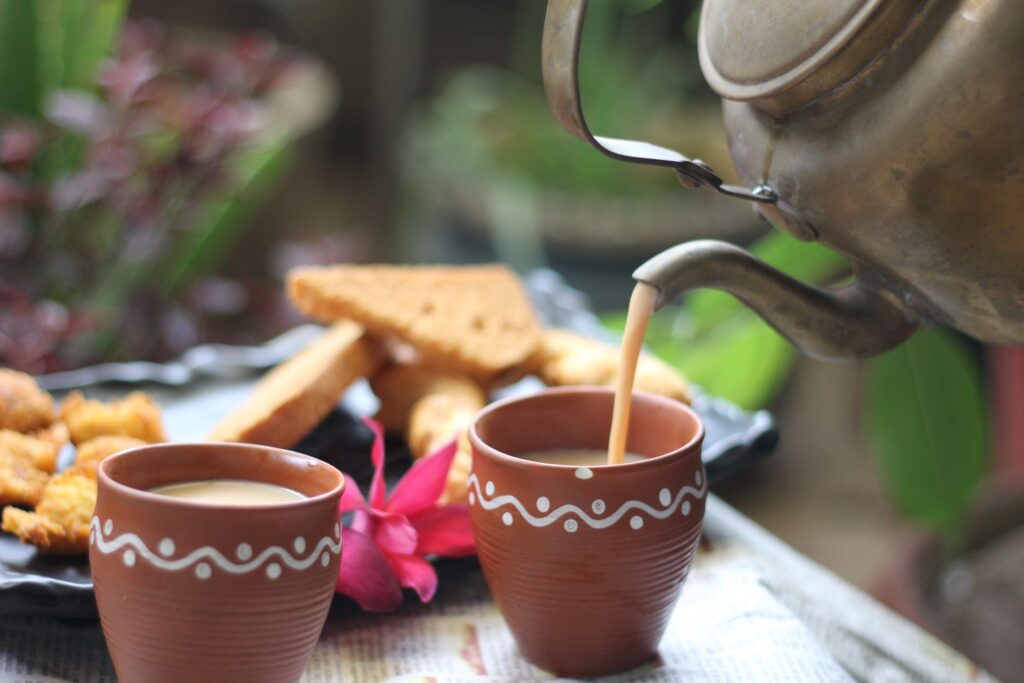
If you have grown up watching your grandmother drop a golden lump of jaggery into her morning chai, you already understand something the rest of the world is slowly catching up to: jaggery for tea is not just a sweetening choice — it is a ritual. Using jaggery in your chai adds a deep, caramel-like sweetness that refined sugar simply cannot match, along with trace minerals that make each cup a little more nourishing.
In this guide, we cover the best ways to use jaggery for tea — from the classic gur wali chai to modern jaggery chai lattes — so you can make the switch with confidence.
Why Choose Jaggery for Tea Over Regular Sugar?
Refined white sugar dissolves fast and sweetens your chai, but that is all it does. Jaggery, on the other hand, brings a complex flavour — earthy, slightly smoky, with a hint of molasses — that transforms your everyday cup into something worth savouring.
From a nutrition standpoint, jaggery retains the natural minerals of sugarcane juice: iron, potassium, magnesium, and calcium. While the quantities are modest, they are still far more than what you get from empty-calorie white sugar. If you want to understand what jaggery actually is, our complete guide to jaggery covers its origins, types, and uses in detail.
The Classic Gur Wali Chai Recipe
Gur wali chai — chai sweetened with jaggery (gur) — has been a staple across North India, especially through the winter months. Here is how to make it properly at home:
What you need (1 cup):
- 1 cup water
- 1 cup full-fat milk
- 1 teaspoon tea leaves (or 1 tea bag)
- 1 small jaggery cube (approximately 10–12 grams)
- 1/4 teaspoon fresh ginger, crushed (optional)
- 2 green cardamom pods, lightly crushed (optional)
Method:
- Bring water to a boil with ginger and cardamom, if using.
- Add tea leaves and simmer for 1 minute.
- Pour in milk and bring back to a gentle boil for 2 minutes.
- Take the chai off the heat and strain into your cup.
- Drop one jaggery cube into the cup and stir until fully dissolved.
Adding jaggery after boiling — rather than during — preserves its delicate mineral content and prevents any bitterness that can develop at very high heat.
How Much Jaggery Should You Use in Tea?
A standard cup of chai (150–200 ml) works well with 8–12 grams of jaggery, roughly one small jaggery cube or a heaped teaspoon of jaggery powder. If you are switching from white sugar, note that jaggery is slightly less sweet by weight, so you may need 20–25% more to match the same sweetness level.
For calorie-conscious mornings, our pre-measured tea sweetener sachets are designed for exactly one cup, removing any guesswork and making consistent sweetness easy to achieve.
Jaggery for Tea — Powder, Cubes, or Liquid?
Jaggery comes in several formats, and each one suits a different style of chai-making:
| Format | Best For | How It Dissolves | Notes |
|---|---|---|---|
| Jaggery cubes | Traditional hot chai | Drops in cup, stir once | Pre-portioned, travel-friendly |
| Jaggery powder | Iced chai, quick chai | Easily in warm liquid | Most convenient for daily use |
| Liquid jaggery | Specialty lattes | Instantly | Stronger, more intense flavour |
Jaggery cubes are the most practical format for hot jaggery chai — pre-measured, clean to handle, and they dissolve effortlessly. For a detailed comparison of jaggery formats and which suits different kitchen uses, see our post on jaggery powder vs blocks.
Spiced Jaggery Chai Latte (Modern Café Style)
Want to turn your morning chai into a café-quality drink? Try this spiced jaggery chai latte — it takes about 7 minutes and uses jaggery for tea in a slightly more elevated way:
- Brew a double-strength masala tea with 2 cardamom pods, a small cinnamon stick, and a coin of fresh ginger. Let steep for 4 minutes.
- Dissolve one jaggery cube in a tablespoon of hot water to make a quick jaggery syrup.
- Froth 150 ml of full-fat milk or oat milk until smooth and velvety.
- Add the jaggery syrup to the cup, pour in the strained tea, then top with frothed milk.
The result is rich, aromatic, and naturally sweet — gur wali chai dressed up for the modern table without a single gram of refined sugar.
Iced Jaggery Chai (For Summer Mornings)
Jaggery works beautifully in cold chai too. Use jaggery powder for iced drinks — it dissolves faster than cubes in room-temperature liquid.
- Brew a strong masala chai concentrate (use half the usual water) and let it cool to room temperature.
- Stir in 1.5 teaspoons of jaggery powder until fully dissolved.
- Pour over a tall glass of ice and add chilled milk to taste.
- Finish with a pinch of cinnamon or nutmeg on top.
This delivers all the warmth of a traditional jaggery chai in a refreshing cold form — perfect for the Indian summer from April to June.
Health Benefits of Switching to Jaggery in Your Daily Chai
Swapping refined sugar for jaggery for tea is a small daily change with a meaningful cumulative effect. Regular jaggery consumption has been associated with better digestion (it functions as a mild digestive stimulant when consumed after meals), improved iron intake, and a more moderate blood sugar response than white sugar — though it remains a caloric sweetener and should still be used mindfully. For a deep dive into the evidence, read our post on the health benefits of jaggery.
Frequently Asked Questions
Can I use jaggery in chai instead of sugar?
Yes. Jaggery is an excellent substitute for refined sugar in chai. It dissolves fully in hot tea and adds a richer, more complex flavour — earthy and caramel-like — compared to the flat sweetness of white sugar.
Does jaggery change the taste of tea?
It does, and most people prefer the change. Jaggery chai (also called gur wali chai) has a deeper, more layered flavour than sugar-sweetened tea. The difference is most noticeable in a simple plain chai without masala.
How much jaggery should I add to one cup of tea?
One small jaggery cube (about 10 grams) is ideal for a standard 150 ml cup. Adjust to taste — start with less and increase if you prefer it sweeter, since jaggery is slightly less sweet than white sugar by weight.
Can I add jaggery to green tea or herbal tea?
Yes, though use a smaller quantity. Jaggery’s strong flavour can overpower the delicate taste of green or herbal teas. Start with half a cube and taste before adding more. A small piece of palm jaggery works especially well with herbal infusions.
Is gur wali chai good for health?
It is healthier than chai made with refined sugar, since jaggery provides trace minerals and is less processed. Both are caloric sweeteners, so moderation applies — but as daily sweetener swaps go, jaggery for tea is one of the easiest wins.
Does jaggery dissolve in cold water or iced tea?
Jaggery powder dissolves reasonably well in room-temperature liquid with stirring. Jaggery cubes and blocks need hot water to dissolve fully. For iced jaggery chai, always dissolve the jaggery in hot tea first before chilling.
What type of jaggery is best for tea?
Jaggery cubes are the most convenient for hot chai — pre-measured and easy to drop directly into the cup. For iced chai or quick recipes, jaggery powder is the most practical. Either way, choose a product without chemical additives or artificial colour.
Aakash Chaudhary is the founder of Biotag - Natural Sweeteners, working with traditional jaggery makers and small-batch farmers across India to bring lab-tested, additive-free natural sweeteners to modern Indian households.