
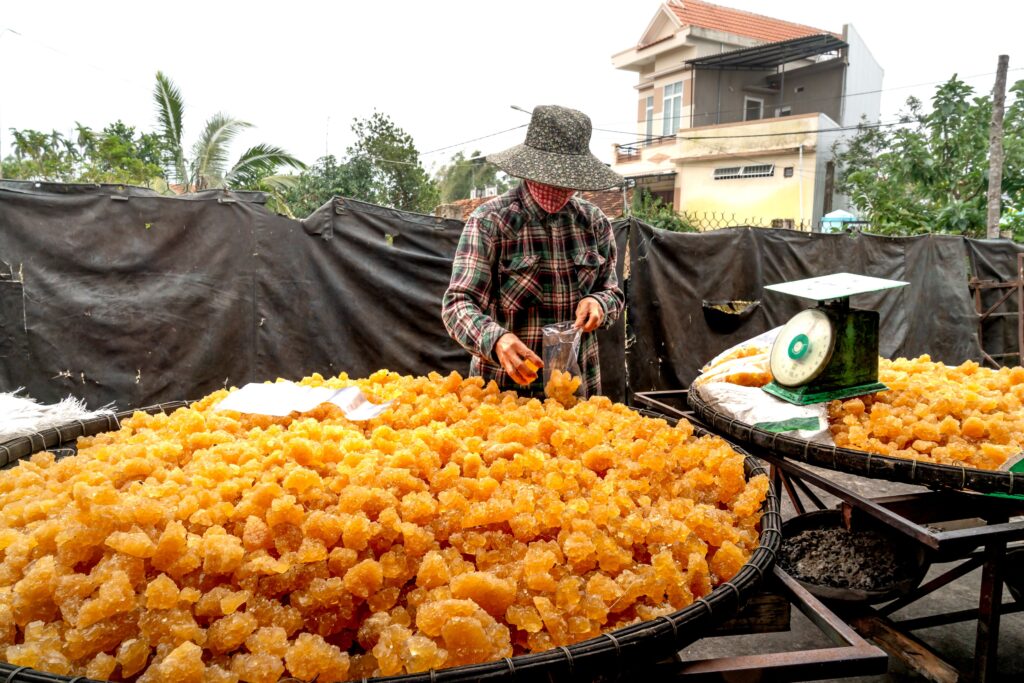
If you have shopped for jaggery lately, you already know the numbers on the shelf do not agree with each other. One pack says ₹80 for 500g, another says ₹220 for a kilo, and a third brand quietly shrank its pack size instead of raising the price. The real jaggery powder price India question comes down to three things: purity, processing, and packaging — not just clever pricing. This 2026 benchmark covers what jaggery powder should cost, why prices vary, and how to spot a fair deal.
What Is Jaggery Powder, and Why Does Pricing Vary So Much?
Jaggery powder is unrefined sugarcane jaggery dried and ground into a free-flowing granule rather than sold as a solid block. It retains the molasses, minerals, and trace nutrients that refined sugar strips out, which is why it costs more than white sugar to begin with. But within jaggery powder itself, prices swing widely because the category spans everything from mass-produced, chemically clarified jaggery to small-batch, traditionally made powder with no additives at all. The jaggery cost on a label is really a proxy for the farming practice, clarification method, and drying process behind it.
Jaggery Powder Price India: The 2026 Benchmark
Based on current retail and D2C listings across India, here is where jaggery price 1kg typically lands by quality tier.
| Quality Tier | Typical Price (1kg) | What You’re Paying For |
|---|---|---|
| Mass-market, chemically clarified | ₹60–₹90 | High-volume production, chemical clarifiers, inconsistent sourcing |
| Mid-range, semi-natural | ₹100–₹160 | Better sourcing, partial clarification, mixed farm batches |
| Lab-tested, additive-free | ₹180–₹260 | Traceable farms, no chemical clarifiers, batch-tested purity |
| Organic-certified, small-batch | ₹250–₹350 | Certified organic cane, artisanal processing, low-volume runs |
Biotag’s jaggery powder sits in the lab-tested, additive-free tier — priced for real sourcing and testing costs, not inflated for a premium label alone.
Why Does Jaggery Powder Price Differ Between Brands?
- Clarification method: Traditional jaggery uses natural clarifiers like okra stem; cheaper brands often use chemical clarifiers such as sodium hydrosulphite, which speeds production but leaves sulphur residue.
- Sourcing model: Jaggery bought in bulk from mixed regional markets costs less than jaggery sourced directly from a known cluster of farmers.
- Testing and traceability: Lab testing for sulphur, adulteration, and moisture adds a real cost per batch that mass-market brands typically skip.
- Packaging: Moisture-proof packaging that prevents clumping costs more than a basic poly pack, but determines how long the product stays usable.
Jaggery Cost vs Refined Sugar: Worth the Difference?
Refined white sugar in India typically retails between ₹40 and ₹50 per kilo, making jaggery look several times more expensive at first glance. But that comparison misses what refining removes: the molasses, iron, and minerals present in cane juice. Jaggery retains a meaningful share of those micronutrients, which is part of why it has stayed a household staple across Indian kitchens for generations. As covered in our piece on the real cost of refined sugar, the sticker price is only part of the comparison.
How to Tell If a Jaggery Powder Price Is Fair
A low price is not automatically a red flag, and a high price is not automatically a quality guarantee. Use these checks instead:
- Check the ingredient list. Pure jaggery powder should list only sugarcane juice — nothing else.
- Look for testing claims. Brands that test for sulphur and adulterants usually say so, and that testing shows up in the price.
- Compare price per kilo, not per pack. A 500g pack at ₹110 costs more per kilo than a 1kg pack at ₹200.
- Watch for shrinkflation. If a familiar brand’s pack quietly drops from 1kg to 900g at the same price, the real cost per kilo has risen.
For a deeper checklist, see our guide on how to spot adulterated jaggery.
Does Jaggery Powder Price Vary by Region in India?
Yes. States close to major sugarcane belts — Uttar Pradesh, Maharashtra, Karnataka, and Tamil Nadu — generally see lower base prices thanks to minimal transport costs and local competition. In metro cities further from cane-growing regions, freight and retail margins add ₹15–₹30 per kilo on average. National D2C brands like Biotag typically price close to a national average rather than a regional one, since sourcing is centralized.
Does Buying in Bulk Reduce the Price Per Kilo?
Generally, yes. A 5kg pack usually brings the per-kilo jaggery cost down 10–20% compared to multiple 1kg packs. This makes sense for households that use jaggery regularly, and even more for small food businesses — our guide on bulk jaggery buying for restaurants and caterers covers volume pricing in detail. Just ensure storage keeps humidity out, since clumped jaggery powder erases any savings from the lower per-kilo price.
Where to Find the Best Value Today
The best value is rarely the cheapest pack on the shelf — it is the pack offering verified purity at the lowest price within its quality tier. Biotag’s jaggery powder sits in the lab-tested, additive-free tier, sourced from traditional jaggery makers and tested for sulphur and adulterants before it ships. If you’re choosing between formats, our 2026 buyer’s guide to the best jaggery brands in India compares blocks, cubes, and powder side by side.
Frequently Asked Questions
What is a fair jaggery powder price India benchmark for 2026?
For lab-tested, additive-free jaggery powder, a fair jaggery powder price India benchmark currently falls between ₹180 and ₹260 per kilo. Prices below this range often mean chemical clarification or unverified sourcing.
Why is jaggery more expensive than white sugar?
Jaggery retains molasses, minerals, and moisture that refined sugar processing removes entirely, and traditional, chemical-free clarification is slower and more labour-intensive than industrial refining.
Is the jaggery price 1kg the same across all brands?
No. Jaggery price 1kg can range from around ₹60 for mass-market, chemically clarified jaggery to over ₹300 for certified organic, small-batch jaggery, mostly reflecting sourcing and testing, not the sugarcane itself.
Does a higher price always mean better quality jaggery?
Not always. Check the ingredient list, testing claims, and packaging rather than treating price alone as a quality signal — some brands price high on packaging or positioning without matching lab testing.
How do I compare the real cost per kilo when pack sizes differ?
Divide the pack price by its weight in kilograms. A 750g pack at ₹165 works out to ₹220 per kilo — a more useful number than the sticker price when pack sizes are non-standard.
Does buying jaggery powder online cost more than buying it locally?
Not necessarily. Local markets near sugarcane belts can be cheaper, but online D2C brands often offset shipping with direct sourcing, bringing the final jaggery cost close to city retail prices for the same quality tier.
Is jaggery powder cheaper than jaggery blocks or cubes?
Powder is usually priced similarly to blocks and cubes per kilo, since the sugarcane and processing base is the same — it simply saves the step of grating or breaking a block.
About the Author: Aakash Chaudhary is the founder of Biotag — The Sugar Company, working with traditional jaggery makers and small-batch farmers across India to bring lab-tested, additive-free natural sweeteners to modern Indian households.