
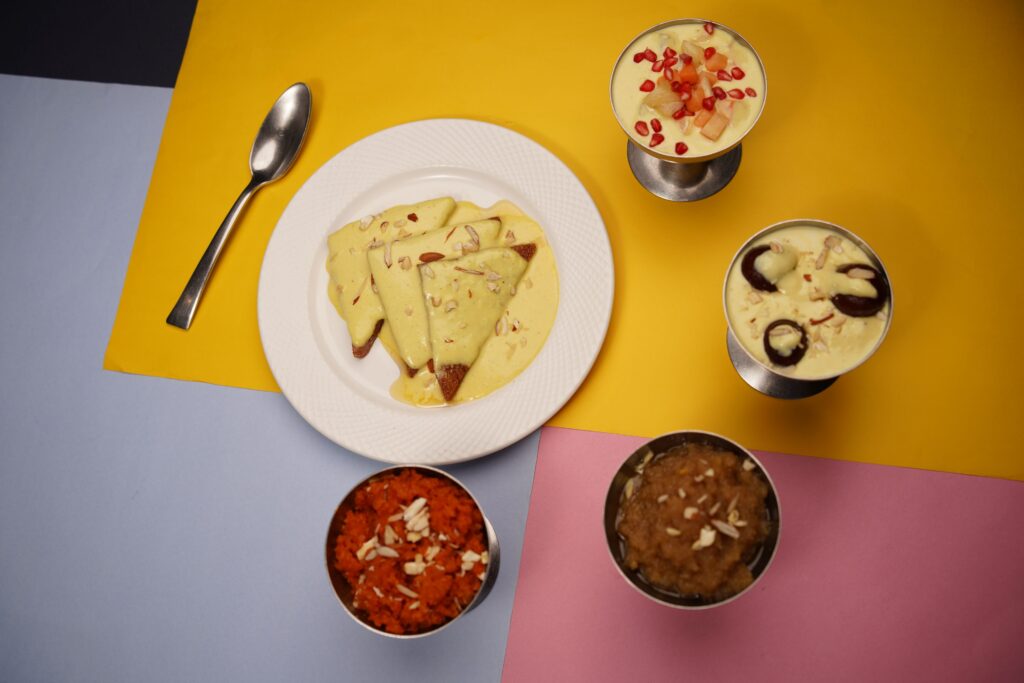
If you grew up in an Indian household, chances are payasam appeared at every festival, birthday, and Sunday lunch. But the version most of us know — made with refined white sugar — sends blood sugar climbing fast and leaves little room for anyone managing diabetes. Palm jaggery payasam solves this without asking you to give up the dessert itself. Swap the sugar for palm jaggery and you get the same silky, caramel-sweet bowl of comfort, minus the sharp sugar spike.
This isn’t a “diet” recipe that tastes like a compromise. Palm jaggery brings a deep, almost butterscotch-like flavour that white sugar can’t replicate, at a meaningfully lower glycemic index. Below is a complete traditional recipe, the science behind why this swap works, and tips for keeping it truly low GI.
What Makes Palm Jaggery Payasam Different
Payasam (also called kheer in North India) is rice or vermicelli simmered slowly in milk, then sweetened and finished with ghee-roasted cashews and raisins. The sweetener is where most of the nutritional story happens. Refined sugar is 100% sucrose — no minerals, no fibre, nothing to slow its absorption into your bloodstream.
Palm jaggery, made by slowly reducing sap from the palmyra or date palm tree, retains trace minerals like iron, potassium, and magnesium, along with small amounts of fibre. That fibre and mineral content is why palm jaggery digests more slowly than refined sugar, giving a gentler rise in blood glucose. For the full breakdown of how it’s made, see our guide to palm jaggery.
Why Palm Jaggery Is the Better Choice for Payasam
- Lower glycemic index: Palm jaggery sits in the low-to-moderate GI range, making it a smarter base for a low GI payasam than refined sugar or standard cane jaggery.
- Deeper flavour: Its slightly smoky, caramelised taste pairs beautifully with cardamom, ghee, and roasted nuts.
- Cleaner dissolve: Good quality date palm jaggery melts smoothly into hot milk without the graininess or curdling risk that block jaggery can cause.
For anyone monitoring blood sugar closely, read our guide on how much jaggery is safe per day for diabetics before making this a regular dessert — moderation still matters, even with a better sweetener.
Palm Jaggery Payasam Recipe (Traditional Style)
Serves 4. Takes about 40 minutes, mostly hands-off simmering.
| Ingredient | Quantity |
|---|---|
| Full-fat milk | 1 litre |
| Raw rice (short-grain) | 1/4 cup |
| Palm jaggery powder | 3/4 cup (adjust to taste) |
| Water | 1/4 cup (for melting jaggery) |
| Ghee | 2 tbsp |
| Cashews, halved | 10-12 |
| Raisins | 1 tbsp |
| Cardamom powder | 1/2 tsp |
| Grated coconut (optional) | 2 tbsp |
- Rinse the rice and cook it in the milk on low heat in a heavy-bottomed pan, stirring occasionally, until soft and the milk has reduced by about a third (25-30 minutes).
- Meanwhile, dissolve the palm jaggery powder in 1/4 cup warm water over low heat. Strain out any impurities and set aside — melting it separately prevents curdling.
- Heat the ghee and roast the cashews and raisins until golden and puffed. Set aside.
- Once the rice-milk mixture has thickened, turn off the heat and let it cool 2-3 minutes. This step matters — adding hot jaggery syrup to boiling milk is the main reason payasam curdles.
- Slowly stir in the dissolved jaggery, mixing continuously.
- Add cardamom powder, the roasted cashews and raisins, and grated coconut if using.
- Serve warm, or chill for a thicker, more indulgent texture.
Tips for the Perfect Low GI Payasam
- Don’t skip the fat: Ghee and full-fat milk slow how quickly natural sugars are absorbed — part of what keeps this a genuine low GI payasam rather than just a lower-sugar one.
- Reduce jaggery gradually: Palm jaggery tastes sweeter per gram than cane sugar, so start with 3/4 cup and taste before adding more.
- Add fibre where you can: Swapping part of the rice for broken wheat or millet further blunts the blood sugar response.
- Watch your portion: Even a healthy kheer becomes less healthy in a large bowl. A small katori (100-120ml) is a reasonable serving.
Variations You Can Try
- Vermicelli payasam: Replace rice with roasted vermicelli for a quicker, 20-minute version.
- Moong dal payasam: Cook split yellow moong dal separately, then combine for a nuttier, protein-richer healthy kheer.
- Coconut milk payasam: Substitute half the milk with coconut milk for a richer version that pairs well with palm jaggery.
- Sago payasam: A popular fasting-friendly option, often made during Navratri.
Nutritional Comparison: Palm Jaggery vs Refined Sugar Payasam
| Factor | Refined Sugar Payasam | Palm Jaggery Payasam |
|---|---|---|
| Glycemic Index of sweetener | High (~65-70) | Low-to-moderate (~35-45) |
| Minerals (iron, potassium, magnesium) | Negligible | Present in trace-to-moderate amounts |
| Flavour depth | Flat sweetness | Caramel, smoky undertones |
| Suitable for diabetic-conscious diets | Not recommended | Better suited, in moderation |
For a wider view of how Indian sweeteners compare on glycemic load, see our glycemic index chart of Indian sweeteners.
Storage and Make-Ahead Tips
Palm jaggery payasam keeps in the refrigerator for up to 2 days in an airtight container. It thickens as it cools, so when reheating, add a splash of warm milk and stir gently over low heat. Avoid microwaving on high, as it can separate the milk proteins. Freezing isn’t recommended — the rice and milk texture doesn’t hold up after thawing.
Frequently Asked Questions
Is palm jaggery payasam actually low GI, or is that just marketing?
Palm jaggery genuinely has a lower glycemic index than refined sugar, largely due to its fibre and mineral content slowing sugar absorption. “Low GI” describes the sweetener, though — portion size and rice quantity also affect the dish’s overall glycemic load.
Can diabetics eat palm jaggery payasam?
In small, controlled portions and with medical guidance, many diabetics can include palm jaggery more comfortably than refined sugar. It is not sugar-free, so portion control still applies — see our guide on safe daily jaggery quantities for diabetics.
How much palm jaggery should I use per litre of milk?
Around 3/4 cup (roughly 150-180g) per litre of milk gives balanced sweetness for most palates. Start lower and adjust upward, since sweetness can vary slightly by batch.
Why did my payasam curdle when I added jaggery?
Hot jaggery syrup meeting boiling milk causes the milk proteins to split. Let the milk cool slightly and dissolve the jaggery separately before combining, as in the recipe above.
Can I use palm jaggery cubes instead of powder?
Yes — grate or chop the cubes finely so they dissolve faster, then melt them in warm water before adding, just as with powder.
Is palm jaggery payasam suitable for weight-conscious diets?
It’s a better choice than a refined-sugar version, but still calorie-dense. Treat it as an occasional healthy kheer rather than a daily food, and keep portions modest.
About the Author: Aakash Chaudhary is the founder of Biotag, working with traditional jaggery makers and small-batch farmers across India to bring lab-tested, additive-free natural sweeteners to modern Indian households.